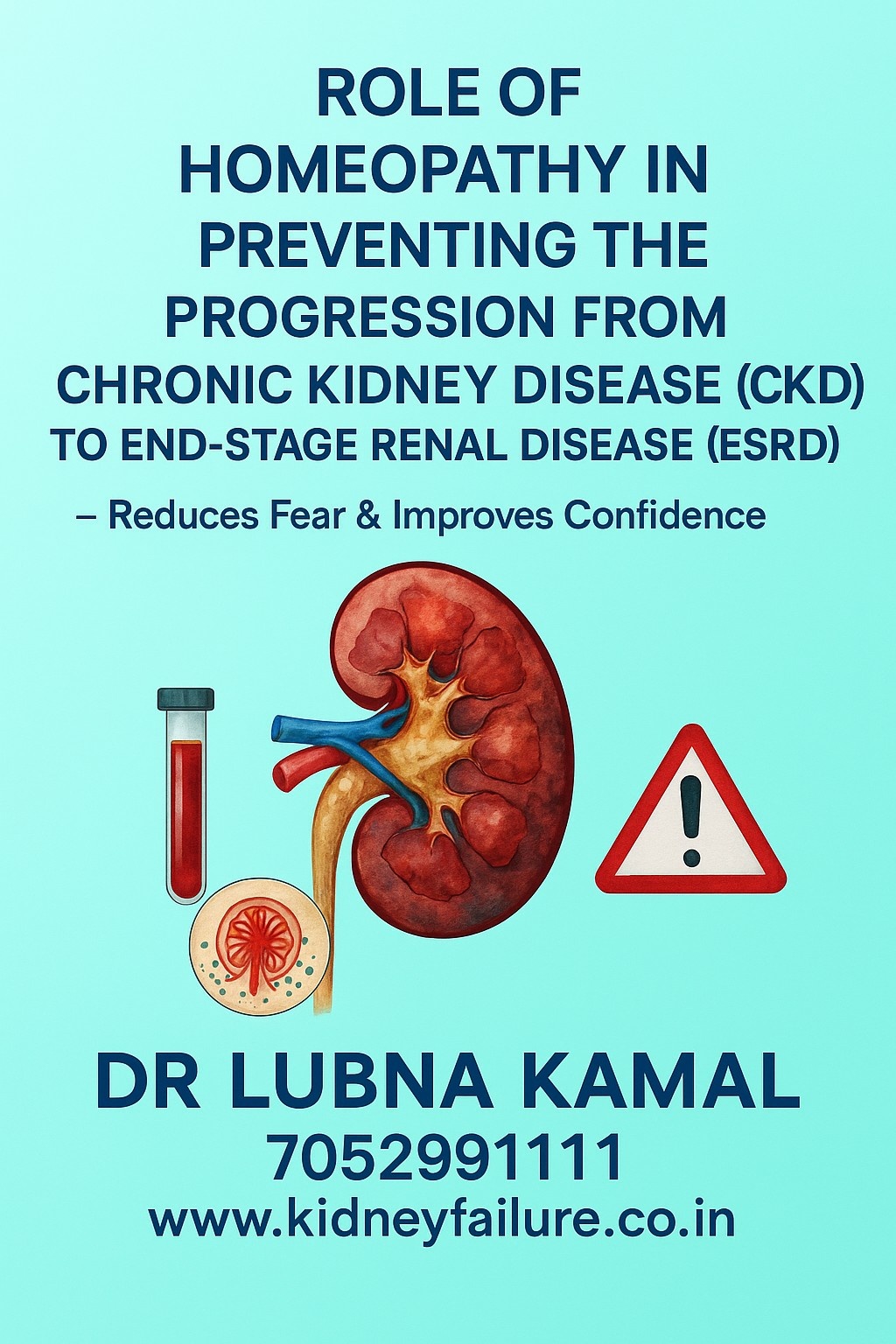
Role of Homeopathy in Preventing the Progression from Chronic Kidney Disease (CKD) to End-Stage Renal Disease (ESRD)
Introduction
Chronic Kidney Disease (CKD) is a long-term condition in which the kidneys gradually lose their ability to filter waste and excess fluid from the blood. When this decline continues unchecked, it eventually leads to End-Stage Renal Disease (ESRD)—a stage where the kidneys can no longer sustain the body’s metabolic balance. At this point, the only medical options available are dialysis or kidney transplantation.
Understanding CKD and Its Progression
The kidneys act as the body’s filtration system, maintaining fluid balance, regulating electrolytes, and removing toxins. When this filtration capacity declines slowly over months or years, waste products begin to accumulate in the blood.
Without proper management, CKD advances through several stages—from mild dysfunction to severe renal impairment. The final stage (Stage 5), known as ESRD, marks near-complete kidney failure. This progression is often influenced by multiple chronic conditions and lifestyle factors.
Common Causes Leading to CKD Progression
- 1. Diabetes Mellitus (Diabetic Nephropathy) – High blood sugar damages the delicate filtering units (nephrons) of the kidneys.
- 2. Hypertension – Persistent high blood pressure exerts pressure on kidney vessels, leading to nephron scarring and reduced function.
- 3. Chronic Glomerulonephritis – Inflammation of the glomeruli (filtering units) causes protein leakage and gradual decline.
- 4. Polycystic Kidney Disease (PKD) – A genetic disorder in which fluid-filled cysts enlarge the kidneys and impair filtration.
- 5. Recurrent Urinary Tract Infections (UTIs) – Repeated infections can cause inflammation and scarring of renal tissues.
- 6. Prolonged Use of Painkillers or Nephrotoxic Drugs – Long-term consumption of certain NSAIDs or antibiotics can harm the kidneys irreversibly.
Signs and Symptoms of Worsening Kidney Function
Recognizing the warning signs early can prevent severe damage. Patients should be alert for:
- - Persistent fatigue and weakness
- - Swelling of the legs, ankles, or face (fluid retention)
- - Reduced urine output or changes in urine color
- - Loss of appetite, nausea, or vomiting
- - High blood pressure resistant to treatment
- - Shortness of breath due to fluid accumulation in the lungs
- - Bone pain, cramps, or brittle bones (from calcium-phosphate imbalance)
- - Itching and dry skin caused by toxin buildup in the blood
The Role of Homeopathy in Slowing CKD Progression
Homeopathy approaches kidney disease from a functional and holistic standpoint rather than just symptomatic management. It aims to stimulate the body's natural healing potential and restore balance to the affected organs.
1. Holistic and Individualized Approach
Every patient is unique. Homeopathic physicians consider not only the clinical symptoms but also the individual’s emotional state, genetic tendencies, and overall constitution. For instance, two patients with CKD may receive entirely different remedies depending on their physical build, mental state, and disease expression.
2. Restoring Kidney Function Naturally
Homeopathic medicines work gently by improving blood circulation to the kidneys, reducing inflammation, and enhancing the body’s ability to filter waste. In early to moderate stages, they can stabilize creatinine and urea levels, reducing the need for early dialysis.
3. Complementary Role with Modern Medicine
Homeopathy does not replace dialysis or allopathic management when necessary. Instead, it acts as a supportive therapy—reducing drug dependency, improving energy, and alleviating side effects of long-term medications.
4. Addressing Associated Symptoms
Many CKD patients suffer from issues like anemia, itching, insomnia, or swelling. Properly chosen homeopathic remedies can provide significant relief from these chronic discomforts, improving quality of life.
5. Emotional and Mental Well-Being
Chronic illness often causes emotional distress—fear, anxiety, depression, and hopelessness. Homeopathy, by treating the mind and body together, helps patients regain emotional stability and resilience.
Benefits of Homeopathic Treatment in CKD
- 1. Slows the progression of kidney damage
- 2. Reduces creatinine and urea levels gradually in early stages
- 3. Improves urine output and relieves edema
- 4. Enhances appetite and digestion, improving nutrition
- 5. Boosts energy and reduces fatigue
- 6. Balances emotional and mental state for better compliance
- 7. Minimizes side effects of long-term medication



