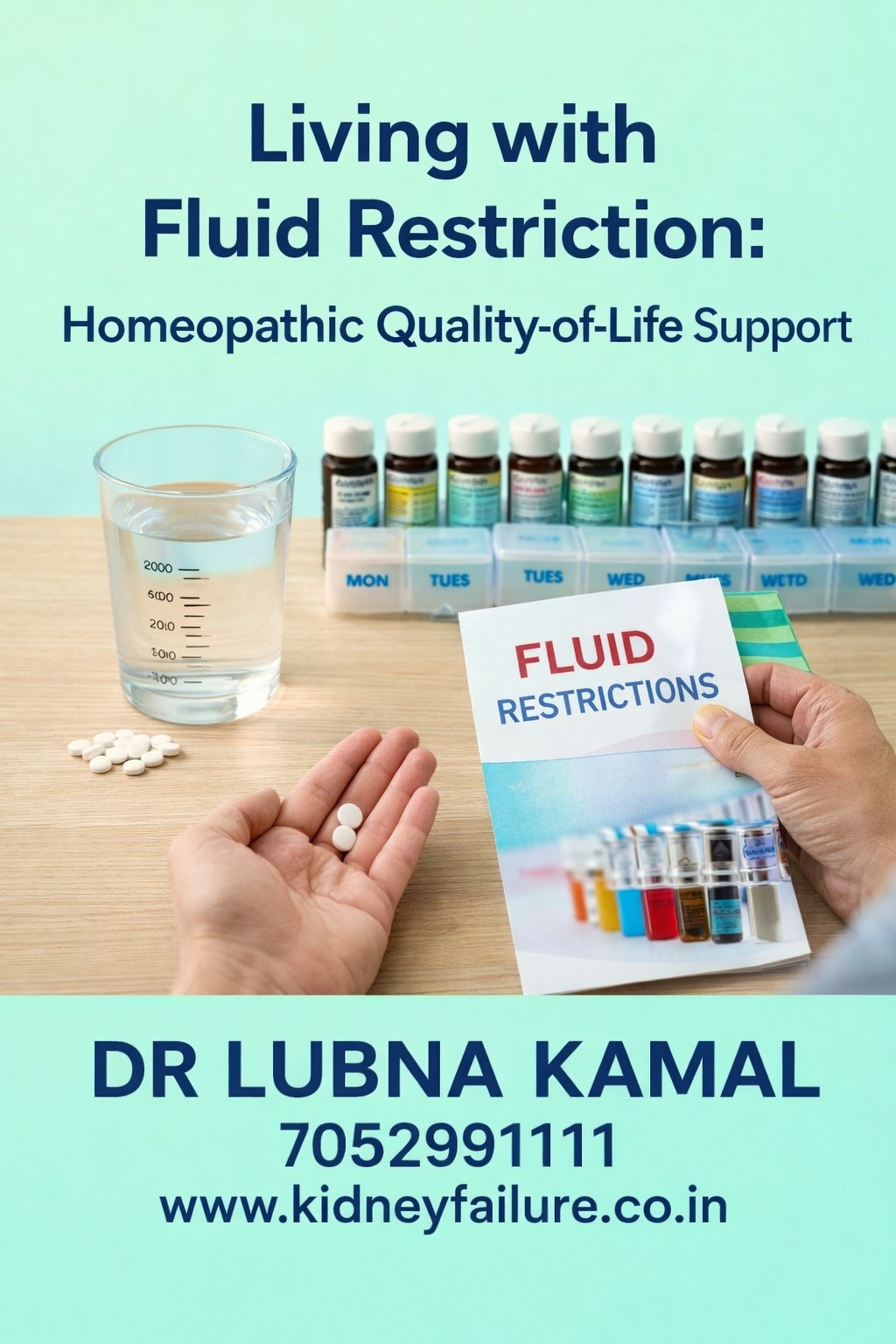
Living with Fluid Restriction: Homeopathic Quality-of-Life Support
Living with fluid restriction can feel overwhelming at first. For many people managing chronic kidney disease, heart conditions, liver disorders, or persistent edema, limiting daily fluid intake becomes a necessary part of treatment. Beyond the physical rules—measuring water, avoiding excess salt, tracking output—there is a deep emotional and lifestyle adjustment involved. Thirst, anxiety, social discomfort, and a sense of loss of freedom are common experiences.
Understanding Fluid Restriction in Daily Life
Fluid restriction means limiting the total amount of fluids consumed in a day. This includes not only water, but also tea, coffee, milk, juices, soups, ice, and even foods with high water content like watermelon or oranges.
Doctors usually recommend fluid restriction when the body cannot properly remove excess water. This may happen in:
Chronic kidney disease (CKD)
Kidney failure or dialysis-
dependent states
Congestive heart failure
Liver cirrhosis
Severe swelling or fluid retention
The goal is not punishment, but protection—preventing breathlessness, swelling, high blood pressure, and strain on vital organs.
However, knowing the reason does not automatically make living with restriction easy.
The Hidden Burden: More Than Just Thirst
Most patients think fluid restriction is only about thirst. In reality, it affects many layers of life.
Physical challenges often include dry mouth, cracked lips, fatigue, headaches, and constipation.
Mental challenges may include irritability, constant thoughts about drinking, frustration, and fear of worsening illness.
Emotional challenges can involve sadness, social withdrawal, and a feeling of being “different” from others.
Festivals, family gatherings, travel, and even routine clinic visits can become stressful when every sip feels counted.
This is where supportive systems—especially holistic approaches—can make a meaningful difference.
Homeopathic Perspective: Supporting Adaptation, Not Suppression
Homeopathy does not aim to mechanically control fluid balance or replace medical treatment. Instead, its role lies in supporting the body’s adaptive capacity and improving quality of life.
From a homeopathic viewpoint, chronic illness reflects a long-standing imbalance in the body’s regulatory systems. Fluid retention, excessive thirst, or dryness are seen as expressions of this imbalance rather than isolated symptoms
Homeopathic quality-of-life support focuses on:
Improving tolerance to restriction
Reducing subjective discomfort like thirst perception
Supporting emotional resilience
Enhancing overall well-being alongside conventional care
This approach respects the individuality of each patient.Two people with the same diagnosis may experience fluid restriction very differently—and their supportive care should reflect that difference.
Individualized Symptom-Based Support
In homeopathy, remedies are selected based on the totality of symptoms, not just the disease label. When living with fluid restriction, common patterns seen in patients include:
Intense thirst but worsening after drinking
Dry mouth without desire to drink
Anxiety linked to limited water intake
Swelling with heaviness and fatigue
Emotional sensitivity or irritability due to restriction
By addressing these subjective experiences, patients often report improved comfort and better mental acceptance of necessary limits.
Importantly, homeopathic support is gentle and non-forcing. It does not push fluids out aggressively, nor does it encourage excess intake against medical advice.
Practical Lifestyle Strategies That Complement Homeopathic Care
Quality of life improves most when internal support is combined with practical habits. Patients living with fluid restriction may find the following strategies helpful:
Managing Thirst Naturally
Rinse the mouth without swallowing
Use ice chips in measured amounts if permitted
Chew sugar-free gum or cloves
Keep lips moisturized to reduce dryness sensation
Smart Fluid Distribution
Spread allowed fluids evenly throughout the day
Use smaller cups to psychologically feel “more frequent” intake
Avoid salty and spicy foods that trigger thirst
Mindful Eating
Choose foods with lower water content
Prefer moist cooking styles that satisfy without excess liquid
Eat slowly to reduce perceived dryness
Homeopathic care works best when such mindful habits are consistently practiced.
Emotional Well-Being: An Often Ignored Need
One of the most valuable aspects of homeopathic quality-of-life support is attention to emotional health. Many patients silently struggle with:
Fear of disease progression
Anger about restrictions
Guilt after exceeding limits
Hopelessness during long-term illness
A calm, listening-based consultation itself can be therapeutic.
When emotional stress reduces, patients often find it easier to follow medical advice and feel more in control of their condition.
Fluid Restriction and Long-Term Compliance
Strict rules without emotional support often lead to poor compliance. Patients may binge drink when overwhelmed or give up tracking altogether.
Holistic support helps patients shift from “forced restriction” to “conscious cooperation.” This mindset change is subtle but powerful. When the body feels supported rather than controlled, adherence improves naturally.
Many individuals report that with proper supportive care, fluid restriction becomes less of a daily battle and more of a manageable routine.
Integrative Care: Working Alongside Conventional Medicine
Homeopathic quality-of-life support should always be used as a complementary approach. It does not replace nephrology care, dialysis protocols, cardiac medications, or dietary guidelines.
Instead, it fits into an integrative model where:
Medical treatment manages pathology
Diet controls measurable intake
Homeopathy supports adaptation and comfort
Counseling and education strengthen coping
This integrative balance is especially important in chronic diseases where treatment is long-term and lifestyle-dependent.
A Gentle Path Toward Better Living
Living with fluid restriction is undeniably challenging, but it does not have to define your entire life. With the right support, many patients rediscover stability, confidence, and emotional balance—even within limitations.
Homeopathic quality-of-life support offers a gentle, individualized way to reduce suffering, improve daily comfort, and help patients live more peacefully with necessary restrictions. When care focuses not only on numbers and limits, but also on human experience, healing becomes deeper and more sustainable.



