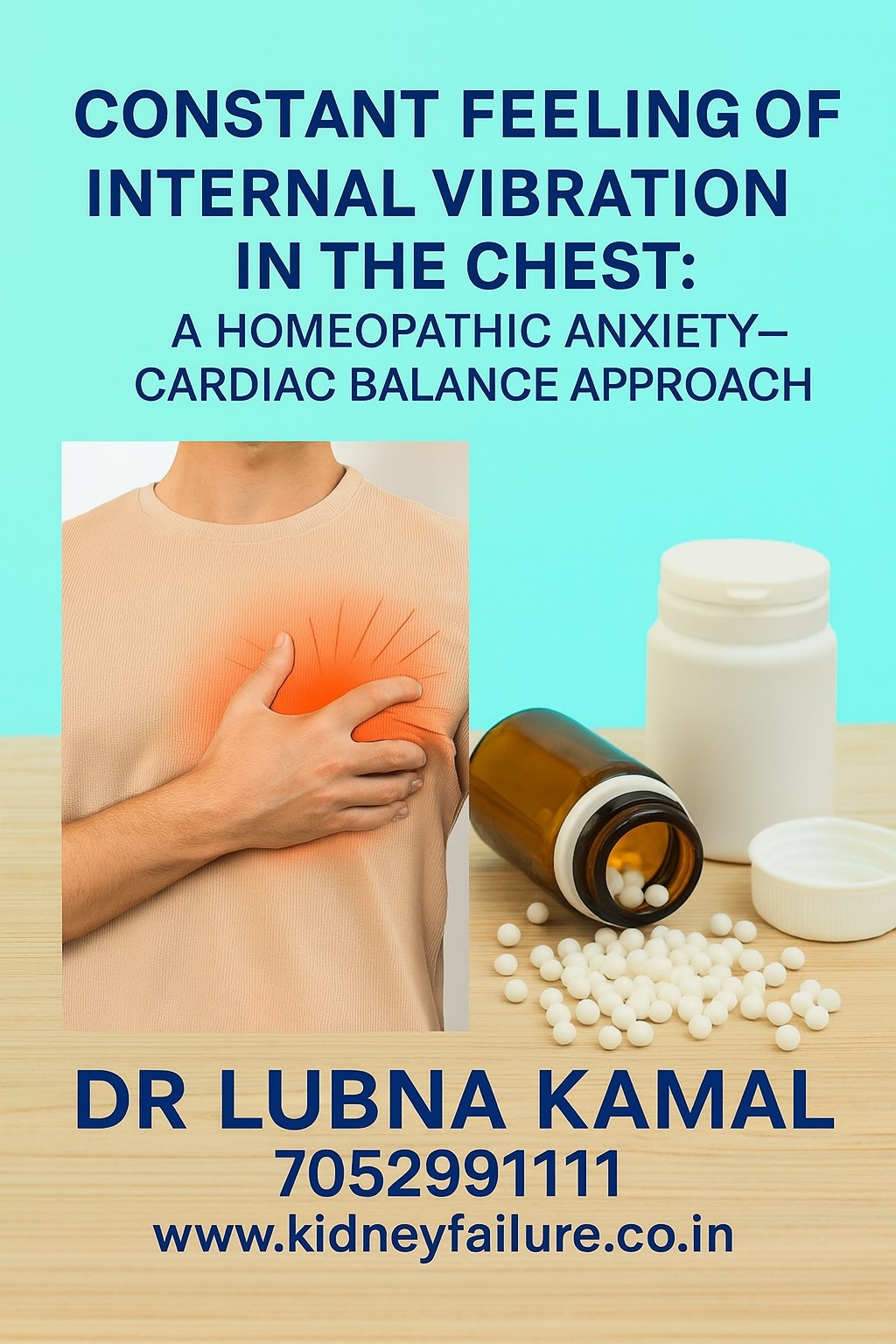
Constant Feeling of Internal Vibration in the Chest: A Homeopathic Anxiety–Cardiac Balance Approach
Many people describe a strange inner sensation in their chest—something that feels like a vibration, flutter, buzzing, trembling, or a faint internal shake that others cannot see. Unlike a regular palpitation or chest pain, this sensation is subtle yet deeply disturbing. It often appears suddenly, lasts for seconds or minutes, and may come and go throughout the day. For some individuals, it becomes a persistent worry, creating fear of an underlying heart problem, neurological weakness, or anxiety disorder.
This internal chest vibration has several possible origins. Modern medical literature links it to stress, heightened nervous system activity, electrolyte imbalance, hormonal changes, medication effects, and even digestive disturbances that irritate the vagus nerve. At the same time, emotional states—especially suppressed fear, anticipatory anxiety, and chronic mental strain—play a significant but often overlooked role.
Why Do Internal Chest Vibrations Happen?
Understanding the Mind–Heart–Nerve Connection
The body’s electrical and nervous systems communicate with the heart constantly. When stress hormones rise or emotional tension increases, the autonomic nervous system becomes overstimulated. This may trigger sensations such as:
- internal trembling or buzzing
- faint vibrations inside the chest
- a fluttering feeling behind the sternum
- momentary “shocks” or sudden quivers
a sense of internal shaking without visible movement
Although most episodes are harmless, they can cause fear—especially when a person is unaware of the cause.
1. Anxiety and Hyperactive Sympathetic Response
Stress triggers adrenaline release. Even mild anxiety can activate the nervous pathways connected to the heart muscle, diaphragm, and intercostal nerves. This results in:
- heightened awareness of heartbeat
- trembling sensations
- inner vibrations during rest or sleep
People who take their emotional burden silently or overthink are especially prone.
2. Cardiac Rhythm Sensitivity
Not all vibrations indicate heart disease, but increased cardiac sensitivity—especially due to anemia, thyroid imbalance, caffeine overuse, dehydration, or long-standing stress—can cause harmless micro-palpitations that feel like “vibrations.”
3. Vagus Nerve Irritation
Digestive issues such as acidity, bloating, constipation, or delayed stomach emptying stimulate the vagus nerve. Since this nerve communicates with the heart and chest:
mild quivering
inner shaking
chest flutter
may occur around mealtimes or at night.
4. Fatigue and Nutrient Deficiencies
Low magnesium, vitamin B12, potassium imbalance, or prolonged exhaustion can make nerves “misfire,” producing vibration-like sensations.
5. Muscular Micro-Spasms
Even tiny spasms of intercostal muscles or the diaphragm can create internal vibrations that a person misinterprets as cardiac symptoms.
Homeopathic Perspective: Restoring the Anxiety–Cardiac Equilibrium
Homeopathy views internal chest vibration as a disturbance in the body’s energy and nerve regulation system. The goal is not merely to remove the vibration but to:
- correct nervous system overstimulation
- calm emotional triggers
- strengthen cardiac sensitivity
- balance the autonomic response
- improve mind–body synchronicity
Based on patient-specific symptoms, history, triggers, fears, and personality traits, individualized remedies provide long-term stability.
Useful Lifestyle Support for Reducing Internal Chest Vibrations
A complete recovery usually requires addressing triggers. These natural strategies often help:
1. Reduce stimulants
Tea, coffee, energy drinks, chocolate, and excessive sugar overstimulate nerves and the heart.
2. Improve sleep hygiene
Poor sleep increases adrenaline levels, worsening inner vibrations.
3. Maintain hydration and electrolytes
Dehydration commonly causes micro-palpitations.
4. Deep breathing techniques
Slow diaphragmatic breathing stabilizes vagus nerve activity.
5. Gentle exercise
Walking, yoga, and stretching regulate stress hormones.
6. Balanced meals
Skipping meals or heavy late-night eating may worsen symptoms.
7. Emotional expression
Discussing worries prevents internal emotional build-up that later manifests as physical symptoms.
Homeopathy as a Holistic Partner in Healing
What makes homeopathy unique is its capacity to work gently on both emotional and physical levels. Instead of blocking symptoms, it helps the body regain its natural rhythm. Over time, patients report:
- calmer mind
- decreased nervous sensitivity
- better stress handling
- stable cardiac sensations
- improved digestion
- deeper sleep
- restored sense of well-being
By balancing the mind–heart–nerve axis, the treatment supports the entire system rather than isolating the condition.



