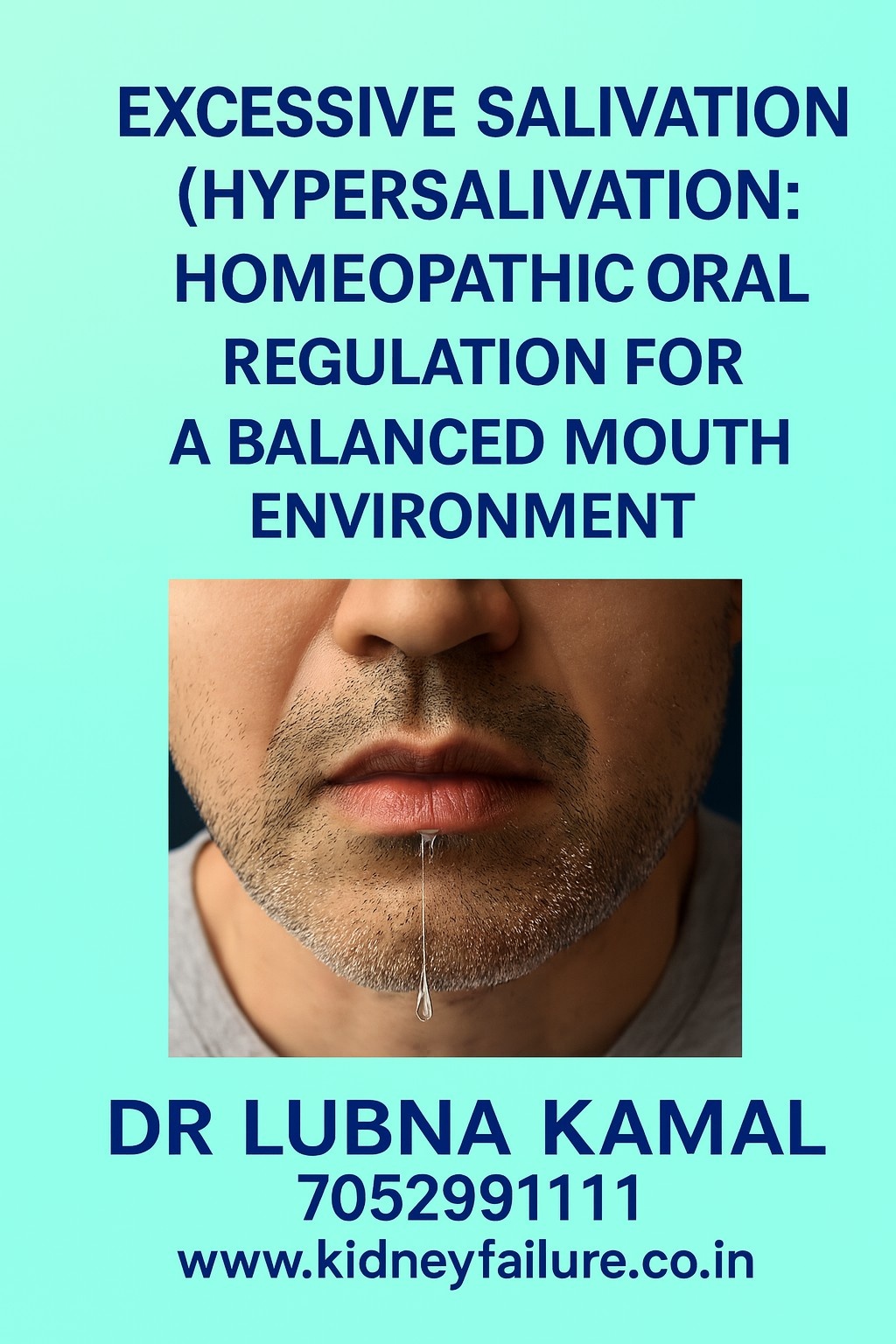
Excessive Salivation (Hypersalivation): Homeopathic Oral Regulation for a Balanced Mouth Environment
Feeling your mouth fill with saliva again and again can be uncomfortable, embarrassing, and at times frightening—especially when you don’t know what is causing it. Excessive salivation, also called hypersalivation, ptyalism, or drooling, is a condition where the salivary glands produce more saliva than the body needs. For some people, it happens occasionally, while for others the problem becomes persistent enough to interfere with daily life, speaking, eating, and confidence
What Is Excessive Salivation?
Saliva plays an essential role in maintaining oral health. It helps digest food, protects teeth, prevents infections, and keeps the mouth lubricated. But when the body starts producing too much saliva or fails to swallow it properly, hypersalivation occurs.
Patients often describe:
- Constant wetness in the mouth
- Drooling unintentionally
- Difficulty speaking clearly
- Increased swallowing
- Foamy or thick saliva
- Metallic or bitter taste
While the condition itself can be uncomfortable, it is usually manageable when the underlying cause is identified and treated properly.
Common Causes of Excessive Salivation
Hypersalivation does not occur without a reason. Understanding these reasons is a step toward proper treatment. The most frequent causes include:
1. Oral or Dental Issues
- Tooth infections
- Mouth ulcers
- Teething in children
- Irritation caused by dental appliances
Inflamed tissues stimulate saliva as a natural protective mechanism.
2. Gastrointestinal Conditions
Many people are surprised to learn that digestive problems may contribute to excess saliva production.
Examples include:
- Acid reflux (GERD)
- Gastritis
- Hiatal hernia
- Nausea from indigestion
In these cases, saliva builds up to neutralize stomach acids.
3. Neurological Disorders
Conditions that weaken facial muscles or affect swallowing can lead to drooling:
- Parkinson’s disease
- Stroke
- Cerebral palsy
- ALS
- Facial nerve palsy
These disorders reduce swallowing ability and cause saliva to accumulate.
4. Pregnancy or Hormonal Changes
Pregnant women may experience ptyalism gravidarum, a condition marked by nausea and hypersalivation. Hormonal fluctuations also play a major role.
5. Side Effects of Medicines
Some medications may increase salivation, such as:
- Anticonvulsants
- Sedatives
- Heart medications
- Antibiotics
Stopping or adjusting medication should only be done under medical guidance.
6. Infections
- Tonsillitis
- Pharyngitis
- Sinus infections
- Viral illnesses
When to Seek Medical Attention
Although hypersalivation is usually not dangerous, seek medical help if you notice:
- Difficulty swallowing food or water
- Sudden onset with facial weakness
- Persistent drooling affecting speech
- Fever or throat swelling
- Associated heartburn or vomiting
- Unexplained weight loss
Proper diagnosis helps rule out serious causes.
Homeopathic Approach to Excessive Salivation
Homeopathy does not suppress saliva artificially. Instead, it works by regulating the underlying imbalance—whether it is digestive, oral, neurological, hormonal, or emotional.
Why Patients Prefer Homeopathy
- Gentle and natural
- No dependence
- Works on root cause
- Suitable for long-term issues
- Improves overall oral health
Homeopathic medicines help balance saliva secretion, reduce irritation, improve swallowing function, and address associated symptoms like nausea, bitterness, or metallic taste.
Below are commonly used homeopathic medicines for educational awareness. Always consult a qualified homeopathic physician for personalised care.
Homeopathic Oral Regulation: How It Works Holistically
Homeopathic care for hypersalivation aims at:
1. Regulating Salivary Gland Activity
Medicines restore normal secretion by acting on the autonomic nervous system.
2. Improving Oral and GI Health
Since many hypersalivation cases originate from gastric issues, addressing digestion is crucial.
3. Balancing Emotions & Stress
Homeopathy pays attention to mental patterns influencing saliva.
4. Enhancing Nerve-Muscle Coordination
Helpful in facial palsy, stroke recovery, or neurological weaknesses.
5. Reducing Mouth Inflammation
Inflamed gums, ulcers, or infections receive targeted remedies.
The goal is comprehensive healing, not temporary relief.
Frequently Asked Questions (FAQs)
1. Is hypersalivation a serious condition?
Usually not, but persistent drooling requires evaluation to rule out infections, neurological issues, or gastric problems.
2. Can homeopathy cure excessive salivation completely?
Many patients experience significant improvement as homeopathy targets root causes rather than suppressing symptoms.
3. How long does treatment take?
It depends on the cause. Acute cases respond quickly, while chronic or neurological cases need long-term management.
4. What should I avoid if I have hypersalivation?
Avoid chewing gum, tobacco, spicy food, and acidic items that increase saliva flow.
5. Is excessive saliva related to acidity?
Yes. The body produces extra saliva to neutralize stomach acids, a condition known as water brash
Conclusion
Excessive salivation can be uncomfortable and frustrating, but it is manageable with the right approach. Homeopathy offers a safe, gentle, and effective method to restore balance, address underlying causes, and improve quality of life. By understanding the triggers, maintaining good oral habits, and seeking professional guidance, patients can regain confidence and comfort in their daily lives.
Whether your hypersalivation is related to gastric trouble, stress, pregnancy, infection, or neurological issues, a personalised homeopathic treatment plan can provide long-lasting relief.



