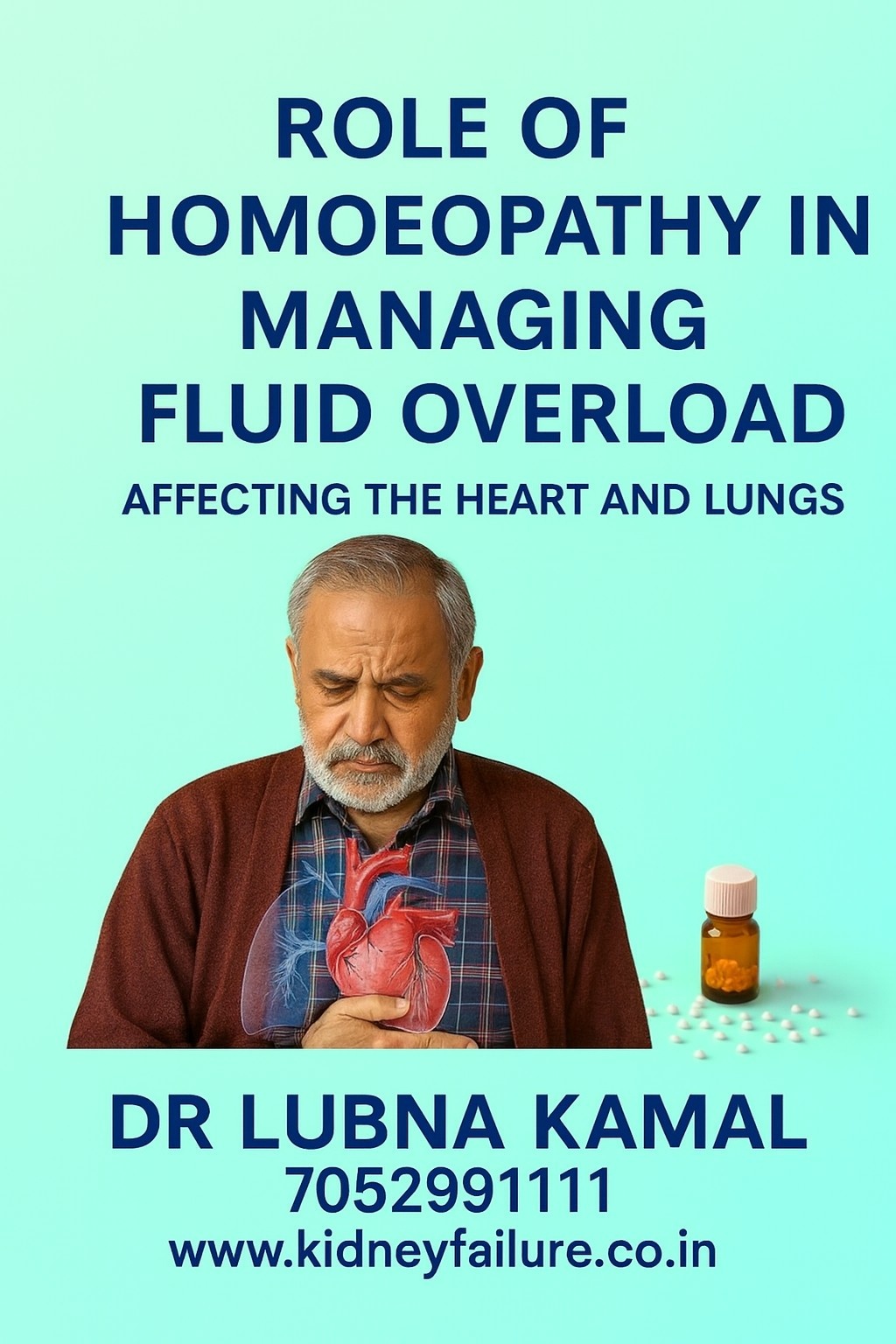
Role of Homeopathy in Managing Fluid Overload Affecting the Heart and Lungs
Fluid overload is a condition in which excess fluid accumulates in the body’s tissues and spaces, placing strain on vital organs—especially the heart and lungs. Many patients experience breathlessness, swelling of the feet or face, chest heaviness, fatigue, and a sense of suffocation when lying down. While conventional medicine focuses on diuretics and mechanical support, many people seek a gentler, more individualized approach that looks beyond fluid numbers alone. Homeopathy offers such a perspective—one that aims to support the body’s self-regulatory mechanisms while addressing the person as a whole.
This article explains fluid overload in simple terms, how it affects the heart and lungs, and the role homeopathy can play as a complementary, patient-centered approach. The focus is on awareness, safety, and realistic expectations.
Understanding Fluid Overload: What Happens Inside the Body?
Fluid balance in the body is tightly regulated by the heart, kidneys, lungs, blood vessels, and hormones. When this balance is disturbed, fluid begins to collect where it shouldn’t.
Common causes include:
- Heart conditions (such as heart failure), where the heart cannot pump efficiently
- Kidney disorders, leading to reduced fluid excretion
- Liver disease, causing altered pressure in blood vessels
- High salt intake, certain medications, or prolonged immobility
When fluid accumulates in the lungs, it may lead to pulmonary congestion or edema, causing shortness of breath, cough, and anxiety. When it builds up around the heart or in the limbs, patients notice swelling, heaviness, and rapid fatigue.
Conventional Management and Its Limitations
Modern medicine plays a crucial role in emergency and acute care of fluid overload. Diuretics, oxygen therapy, and hospital monitoring can be life-saving. However, many patients face challenges during long-term management, such as:
- Dependency on high-dose diuretics
- Electrolyte imbalances
- Persistent fatigue and weakness
- Recurrent episodes despite treatment
This is where many patients look for supportive systems that can work alongside standard care, focusing on overall balance rather than symptom suppression alone.
How Homeopathy Views Fluid Overload
Homeopathy does not see fluid overload as an isolated mechanical problem. Instead, it understands it as a sign of deeper imbalance in the body’s regulatory systems—circulation, metabolism, nerve response, and organ vitality.
Rather than treating “fluid” alone, homeopathy considers:
- The pattern of swelling (where, when, and how it appears)
- The nature of breathlessness (worse at night, on exertion, lying flat, or with anxiety)
- The patient’s thermal sensitivity, thirst, appetite, and sleep
Emotional factors such as fear, restlessness, or exhaustion
This individualized approach helps tailor care to the person experiencing the condition, not just the diagnosis.
Homeopathy and Fluid Overload Affecting the Heart
When excess fluid strains the heart, patients may feel palpitations, chest pressure, easy tiredness, or swelling that worsens by evening. Homeopathic management focuses on supporting circulatory balance and reducing the tendency toward fluid retention through constitutional care.
Key goals include:
- Improving circulatory efficiency
- Reducing venous congestion
- Supporting heart–kidney coordination
- Addressing associated anxiety or weakness
By selecting remedies based on symptom patterns and overall constitution, homeopathy aims to assist the body in redistributing and eliminating excess fluid more naturally over time.
Homeopathy and Fluid Accumulation in the Lungs
Fluid in the lungs can be frightening. Patients may wake up gasping for air, feel better sitting upright, or experience a sense of suffocation in closed rooms. From a homeopathic standpoint, these details are critical clues.
Homeopathic care seeks to:
- Ease the sensation of breathlessness
- Support lung tissue response
- Calm the nervous system’s panic response
- Improve tolerance to lying down and exertion
By addressing both physical and emotional components of breathlessness, homeopathy often brings a sense of relief and stability that patients value deeply.
Lifestyle Support Alongside Homeopathic Care
For patients with fluid overload affecting the heart and lungs, small daily measures make a meaningful difference:
- Reducing excess salt intake
- Maintaining gentle physical activity as advised
- Elevating legs to reduce swelling
- Monitoring weight changes
- Following fluid restrictions if prescribed
Homeopathy often reinforces these measures by improving the body’s responsiveness to them.
Final Thoughts
Fluid overload affecting the heart and lungs is a complex condition that impacts both physical comfort and emotional well-being. While modern medicine remains essential, homeopathy offers a thoughtful, individualized approach that supports the body’s natural regulation and the patient’s overall experience of illness.
By focusing on patterns, sensations, and the person behind the symptoms, homeopathy provides a gentle pathway for long-term support—one that many patients find reassuring in their journey toward better balance and breathing.



