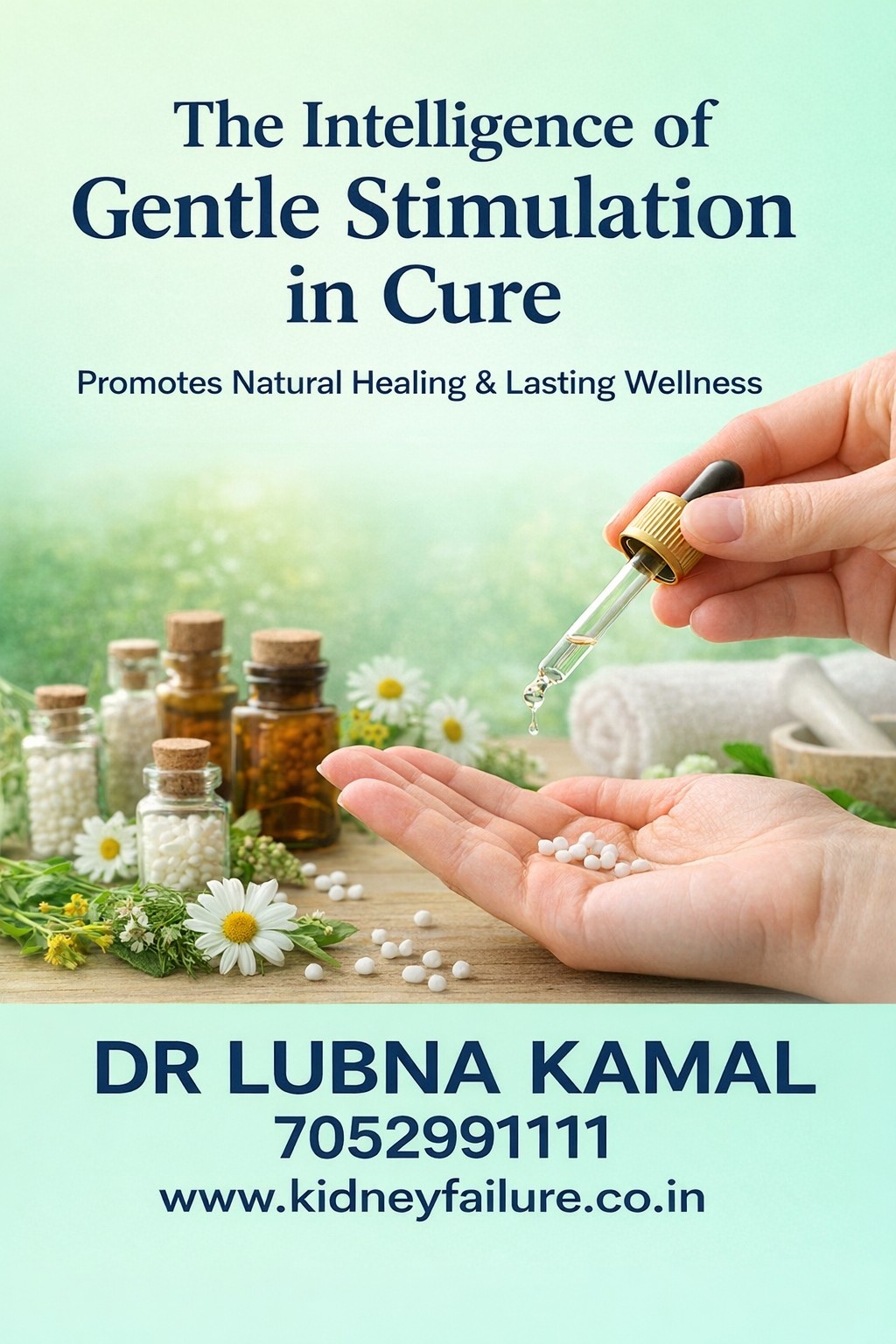
The Intelligence of Gentle Stimulation in Cure
In modern healthcare, strength is often mistaken for effectiveness. Strong medicines, aggressive interventions, and rapid suppression of symptoms are frequently equated with better outcomes. Yet, when we observe the human body carefully, a different truth emerges: the body heals best when it is guided, not forced. This is where the intelligence of gentle stimulation in cure becomes deeply relevant.
Gentle stimulation is not about doing less. It is about doing what is appropriate, at the right intensity, in harmony with the body’s own regulatory systems. This principle lies at the heart of holistic and homeopathic approaches, where the goal is not merely to silence symptoms but to restore balance, resilience, and long-term health.
Understanding Gentle Stimulation in Healing
Gentle stimulation refers to therapeutic input that nudges the body’s self-healing mechanisms instead of overpowering them. The human organism is an intelligent system, equipped with feedback loops involving the nervous system, immune responses, hormones, and cellular signaling pathways.
When stimulation is too strong:
The body may react defensively
Symptoms may be suppressed rather than resolved
Side effects may appear
Long-term dependency on medication can develop
When stimulation is gentle and precise:
The body responds cooperatively
Healing occurs from within
Functions are corrected gradually
Overall vitality improves
Homeopathy is built on this understanding. Rather than overwhelming physiology, it provides a subtle biological signal that encourages the body to correct itself.
Why the Body Responds Better to Gentle Signals
Every system in the body works on regulation, not force. Consider how health naturally returns:
A small wound heals without external aggression
Fever rises modestly to fight infection
Hormones fluctuate gently to maintain balance
Excessive interference often disrupts these processes. Gentle stimulation respects the body’s adaptive intelligence—its ability to recognize imbalance and move back toward equilibrium.
From a patient’s perspective, this is why many people report:
Feeling “more themselves” during gentle treatment
Gradual but lasting improvement
Fewer unwanted reactions
Better emotional and mental well-being
Healing, in this sense, becomes restorative rather than suppressive.
The Difference Between Suppression and Cure
One of the most important distinctions in medicine is the difference between symptom suppression and true cure.
Suppression:
- Temporarily removes symptoms
- Does not address the root imbalance
- Symptoms may return or shift elsewhere
- Can weaken the body’s natural response over time
Gentle curative stimulation:
- Encourages the body to resolve the underlying issue
- Symptoms reduce as health improves
- Recovery is gradual but stable
- Overall resistance and vitality increase
For patients with chronic conditions—such as allergies, digestive disorders, hormonal imbalance, anxiety, skin problems, or early kidney and metabolic disturbances—this difference is crucial.
Homeopathy and the Principle of Intelligent Stimulation
Homeopathy works on the principle that a small, well-chosen stimulus can trigger a large, organized response from the body. The medicine does not act chemically in the conventional sense. Instead, it communicates with the body’s regulatory systems.
This explains why homeopathic remedies:
- Are given in minimal doses
- Do not overload the liver or kidneys
- Can be safely used in sensitive individuals
- Often improve multiple complaints simultaneously
The intelligence lies not in the strength of the medicine, but in its similarity to the patient’s symptom pattern. When the match is accurate, the body recognizes the signal and begins self-correction.
Gentle Stimulation in Chronic and Lifestyle Diseases
Chronic diseases rarely develop overnight. They are the result of long-standing imbalance involving stress, lifestyle, emotional burden, and physical predisposition. Aggressive treatment may control numbers and reports, but patients often say, “My tests are better, but I don’t feel better.”
Gentle stimulation aims to:
- Improve energy levels
- Normalize sleep and appetite
- Stabilize mood and mental clarity
- Support organ function gradually
This is especially relevant in conditions such as:
- Thyroid disorders
- Early chronic kidney disease
- Functional gastrointestinal issues
- Hormonal imbalance
- Anxiety-related physical complaints
Here, subtle correction often proves more sustainable than forceful intervention
Safety, Sensitivity, and Long-Term Well-Being
One of the greatest advantages of gentle stimulation is safety. Because the approach works with the body rather than against it:
- Adverse effects are minimal
- Elderly and children tolerate treatment well
- Long-term use does not burden organs
- Recovery feels natural, not artificial
Patients frequently describe the experience as:
> “My body feels supported, not pushed.”
This sense of safety builds trust, which itself plays a role in healing. The mind-body connection is real, and gentle approaches respect that relationship.
The Role of the Physician in Gentle Cure
Gentle stimulation does not mean casual treatment. It requires:
- Careful case-taking
- Individualized medicine selection
- Observation of subtle changes
- Patience and follow-up
A skilled practitioner understands when to stimulate, when to wait, and when to adjust. Healing unfolds in layers, and gentle medicine allows those layers to resolve without disruption.
Final Thoughts
True cure is not loud. It does not shock the body into silence. It speaks softly, listens carefully, and allows the organism to restore itself. The intelligence of gentle stimulation lies in its humility—it trusts the body’s wisdom.
For patients seeking meaningful, lasting recovery, this approach offers something rare in modern medicine: healing that feels natural, respectful, and complete.



