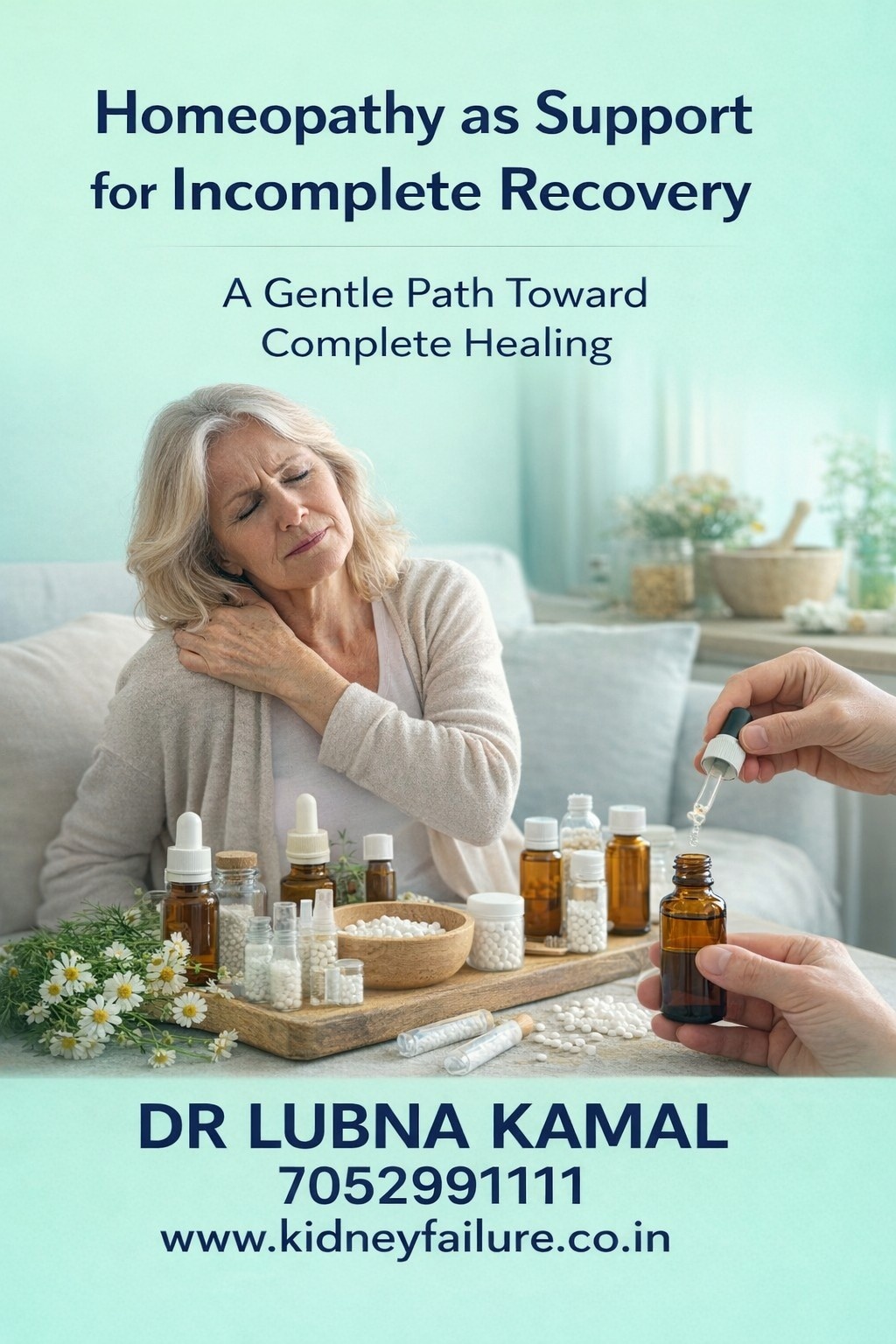
Homeopathy as Support for Incomplete Recovery: A Gentle Path Toward Complete Healing
Incomplete recovery is a situation many patients silently struggle with. The main illness may appear “treated,” reports may look normal, and doctors may say everything is fine—yet the person does not feel fully well. Fatigue lingers, old symptoms return intermittently, mental clarity feels reduced, sleep remains disturbed, or general vitality does not return to its earlier state. This phase, often overlooked, is where true healing either completes itself or stagnates.
Homeopathy plays a valuable supportive role in such cases. It focuses not only on disease labels or test results but on the total recovery of the individual—physically, mentally, and emotionally. For patients who feel “better but not well,” homeopathy can provide a safe and holistic approach toward deeper restoration
Understanding Incomplete Recovery
Incomplete recovery does not always mean treatment failure. It often means that surface-level improvement has occurred, but deeper imbalances remain unresolved.
Common situations where incomplete recovery is seen include:
- After infections such as viral fever, dengue, COVID-19, typhoid, or tuberculosis
- Post-surgical recovery where weakness, pain, or stiffness persists
- After long-term use of antibiotics, painkillers, steroids, or psychiatric medications
- Following chronic illnesses like gastritis, migraine, asthma, skin disorders, or joint problems
- Emotional stress, grief, anxiety, or burnout that continues even after physical recovery
Patients frequently report:
- Persistent weakness or easy exhaustion
- Poor concentration or mental dullness
- Sleep disturbances
- Recurrent minor complaints like acidity, body aches, headaches
- Reduced immunity and frequent infections
- Emotional instability, irritability, or low mood
Conventional treatment often focuses on eliminating the primary disease. Once reports normalize, supportive care is usually limited. This is where homeopathy can help bridge the gap between partial recovery and complete health.
How Homeopathy Views Recovery
Homeopathy is based on the principle that health is not merely the absence of disease but the presence of balance and vitality.
According to homeopathic philosophy:
- The body has an innate healing force
- Disease occurs when this force is disturbed
- True recovery happens when this force is restored
In cases of incomplete recovery, the vital force may be weakened or suppressed rather than fully corrected. Symptoms may be muted but not resolved at the root level.
Homeopathy works by:
- Stimulating the body’s natural healing response
- Addressing residual effects of illness or medication
- Supporting emotional and mental recovery along with physical healing
Conditions Where Homeopathy Supports Incomplete Recovery
Homeopathy is commonly helpful in incomplete recovery following:
- Viral and post-viral syndromes
- Respiratory infections and recurrent cough
- Digestive disorders like gastritis, IBS, acidity
- Skin conditions with partial improvement
- Joint pain and musculoskeletal weakness
- Migraine and chronic headaches
- Anxiety, depression, and stress-related conditions
- Post-COVID fatigue and brain fog
In such cases, homeopathy does not replace emergency care but acts as a supportive, restorative system.
Conclusion
Incomplete recovery is a common yet under-recognized phase of illness. While modern medicine excels at acute care and disease control, homeopathy complements this by addressing residual symptoms, emotional well-being, and overall vitality.
By supporting the body’s natural healing capacity, homeopathy helps patients move from partial relief to complete recovery, making it a valuable option for those seeking holistic and lasting health.



