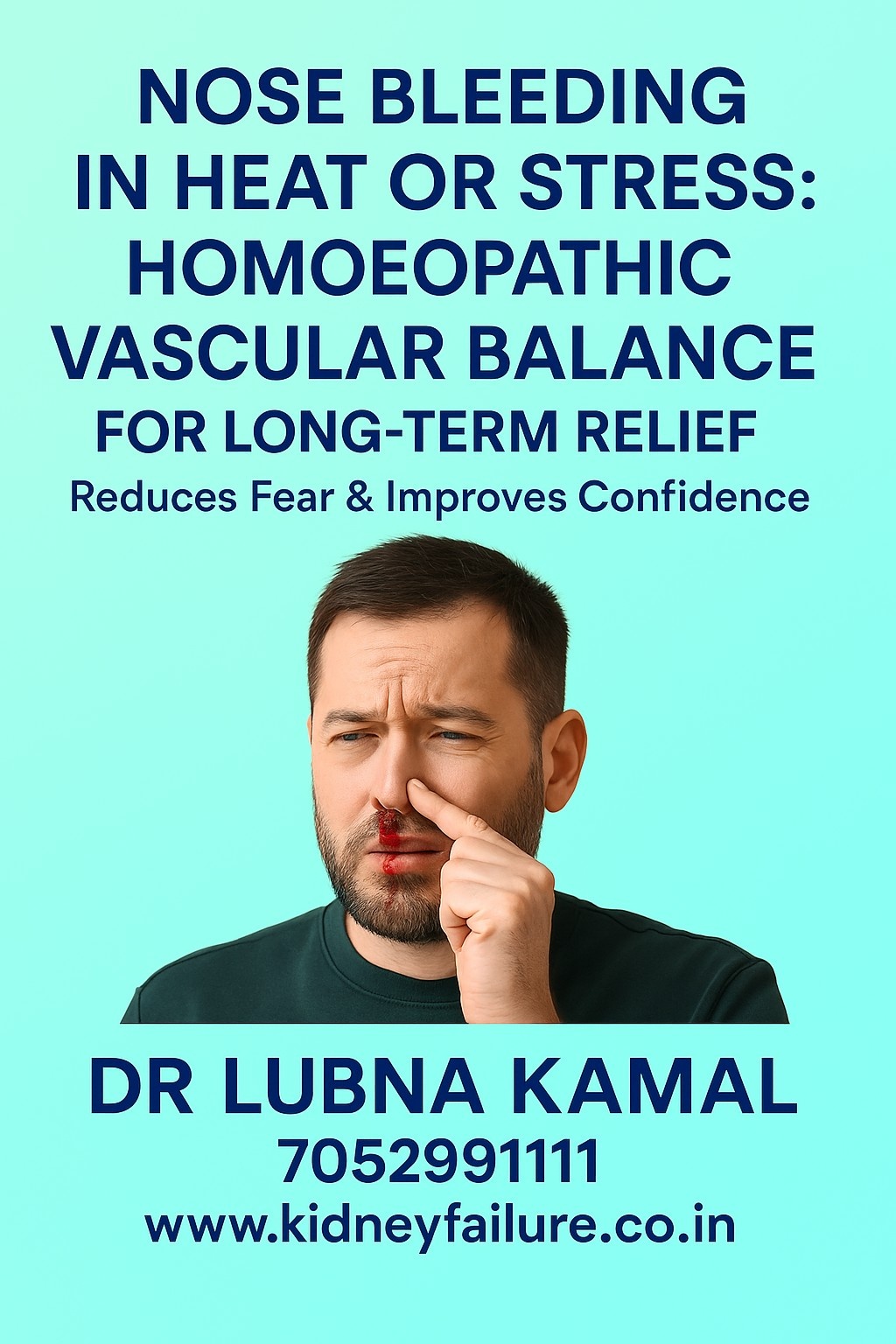
Nose Bleeding in Heat or Stress: Homeopathic Vascular Balance for Long-Term Relief
Nose bleeding during hot weather or episodes of emotional stress is far more common than most people realize. Many individuals experience this sudden trickle of blood during summer months, after physical exertion, or during a burst of tension or anxiety. For some, the bleeding is mild and occasional; for others, it becomes a repeated concern that affects their day-to-day confidence and comfort.
Understanding Nose Bleeding in Heat and Stress
Nosebleeds—medically known as epistaxis—can occur when the small capillaries inside the nostrils rupture. These capillaries lie very close to the surface and react sensitively to environmental and emotional changes.
1. Heat as a Trigger
Hot weather causes the vessels inside the nose to dilate. When they expand, they become more fragile and may burst easily. That is why many people notice bleeding during summers, after sun exposure, or when entering a warm environment after being in the cold.
2. Stress and Emotional Pressure
Stress affects the body's autonomic nervous system. During tension, blood pressure can rise briefly, and the vascular lining may become more reactive. This sudden change can trigger a nosebleed, especially in someone already prone to one.
3. Dryness and Dehydration
Hot climates dry out the nasal membranes, causing tiny cracks that make vessels more likely to bleed. People who do not drink enough water or spend long hours in dry, air-conditioned areas often experience this problem.
4. Nutritional and Lifestyle Factors
Lack of Vitamin C, poor sleep, smoking, alcohol use, and continuous digital screen exposure can make the nasal lining weaker. Hormonal fluctuations and certain medications also contribute.
5. Structural or Medical Issues
Some cases involve a deviated septum, sinus infection, allergies, high blood pressure, or clotting disorders. These require a medical evaluation, especially if the bleeding becomes frequent.
Why Homeopathy is Beneficial in Recurrent Nose Bleeding
Homeopathic medicine focuses on strengthening the blood vessels, balancing the body’s heat regulation, and harmonizing stress responses. Instead of merely stopping the bleeding temporarily, homeopathy aims to prevent recurrence by improving internal resilience.
How Homeopathy Helps
Enhances vascular tone and reduces fragility
Balances heat sensitivity and regulates body temperature
Helps calm stress-triggered vascular reactions
Improves overall circulation and oxygenation
Addresses constitutional tendencies—meaning the medicines are chosen based on an individual's physical and emotional makeup
Homeopathic remedies are known for being gentle yet highly effective when selected correctly. They work without side effects and are safe for children, adults, and elderly individuals.
Lifestyle Measures for Preventing Heat- or Stress-Related Nosebleeds
Along with homeopathic treatment, certain practical steps help prevent recurrence by naturally supporting vascular health.
1. Keep the Nasal Passages Moist
Apply a thin layer of coconut oil, ghee, or saline gel inside the nostrils, especially during summer and winter. Moisture reduces friction and cracking.
2. Stay Hydrated Throughout the Day
Drink water regularly, even when you are not thirsty. Fresh fruits, lemon water, and coconut water boost hydration and replenish electrolytes.
3. Avoid Sudden Temperature Changes
Switching abruptly from a cold environment to hot weather (and vice versa) stresses the nasal vessels. Try adjusting slowly.
4. Manage Stress Levels
Deep breathing, walking, yoga, meditation, and setting healthy boundaries help regulate blood pressure and calm the nervous system.
5. Limit Smoking and Alcohol
Both dry out and irritate the nasal lining and weaken circulation.
6. Maintain Vitamin-Rich Nutrition
Foods rich in vitamin C, iron, and antioxidants strengthen blood vessels and improve healing.
7. Use a Humidifier if Needed
Dry indoor environments increase the risk of nosebleeds. Maintaining humidity supports the nasal lining.
When Should You Seek Medical Attention?
Although most nosebleeds caused by heat or stress are harmless, certain warning signs require prompt medical evaluation:
Bleeding that lasts longer than 20 minutes
Bleeding that occurs multiple times in a week
Accompanying symptoms like dizziness, palpitations, or weakness
Nosebleeds after a head injury
Presence of high blood pressure, clotting disorders, or chronic sinus issues
Homeopathy’s Unique Approach: Vascular Balance
What makes homeopathic treatment different is its holistic philosophy. Homeopathy does not treat the nose as a separate organ but views the bleeding as a sign of internal imbalance. The treatment strengthens the entire vascular system—capillaries, veins, and circulatory mechanisms—while simultaneously calming heat sensitivity and stress susceptibility.
Balancing Heat Regulation
Some individuals naturally “run hotter.” Their face heats up quickly, they sweat easily, and they cannot tolerate the sun. Homeopathic remedies help stabilize this internal thermostat.
Harmonizing Stress Responses
Stress affects everyone differently. Some react with headaches, others with stomach issues, and some with nosebleeds. Homeopathy targets this constitutional sensitivity so the vascular system doesn’t overreact.
Improving Blood Quality and Circulation
By enhancing oxygenation and reducing congestion, the vessels become stronger and less prone to rupture.
This integrated approach ensures long-term relief rather than temporary suppression.
Conclusion: Holistic, Safe, and Effective Care
Heat-induced and stress-related nosebleeds may seem scary at first glance, but once you understand the triggers, the condition becomes much easier to manage. Strengthening the nose’s inner lining, improving vascular health, and calming the stress response are key to long-term relief.
Homeopathic medicine excels in these areas, offering natural and personalized solutions without side effects. Combined with simple lifestyle measures, homeopathy provides a complete and sustainable approach to keeping nosebleeds under control.



