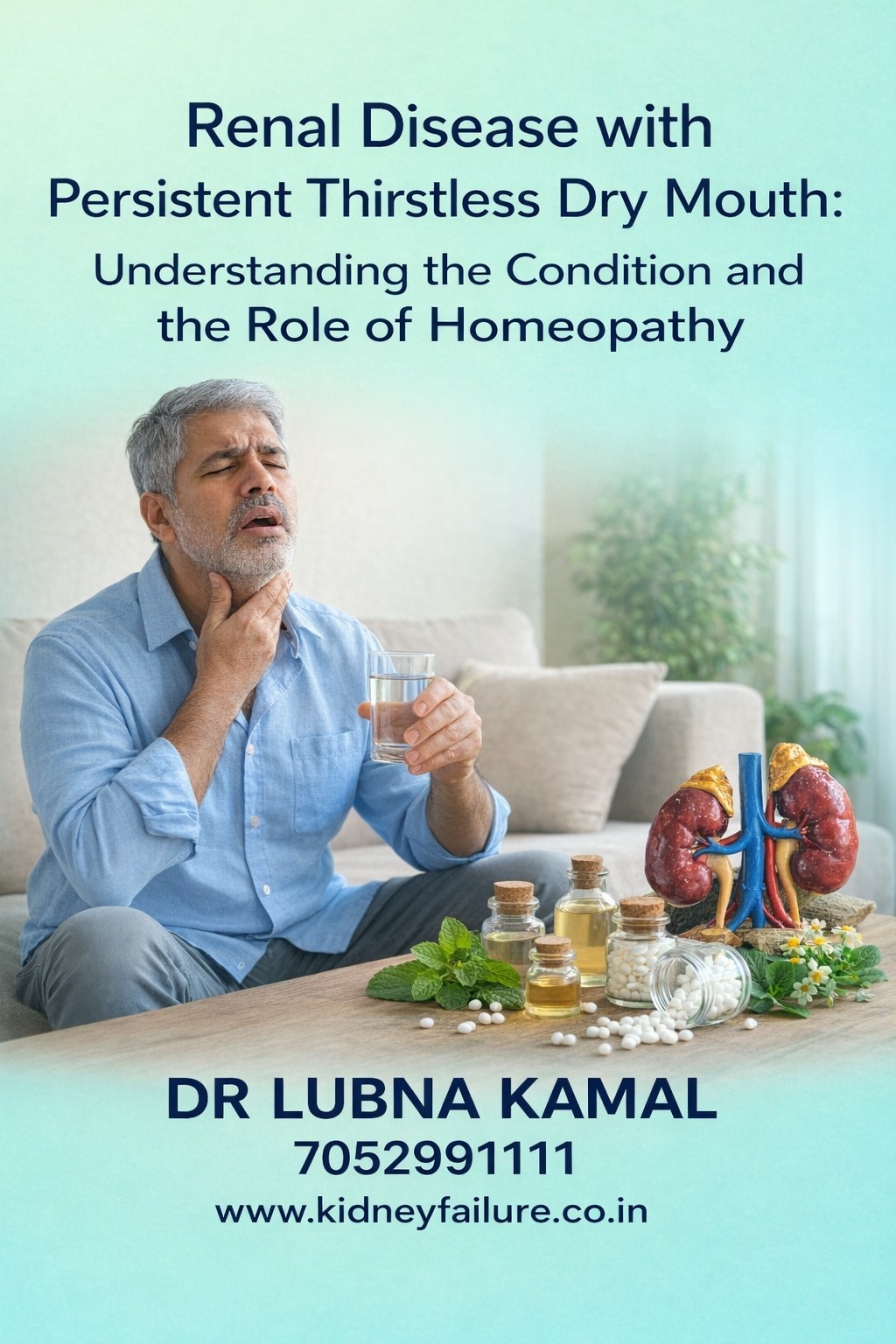
Renal Disease with Persistent Thirstless Dry Mouth: Understanding the Condition and the Role of Homeopathy
Renal disease affects millions of people worldwide and often presents with symptoms that may appear minor at first but signal deeper internal imbalance. One such overlooked symptom is a persistent dry mouth without thirst. While most people associate dryness of the mouth with dehydration or increased water intake, the absence of thirst despite dryness can indicate a functional or systemic disturbance, particularly involving the kidneys.
Understanding Renal Disease
The kidneys play a vital role in maintaining internal balance. They regulate fluid levels, remove waste products, maintain electrolyte balance, and support blood pressure regulation. When kidney function becomes compromised, the body often sends subtle signals before more serious symptoms appear.
Renal disease may be:
- Acute or chronic
- Mild or progressive
- Functional or structural
Early signs may include fatigue, changes in urination, swelling, digestive disturbances, or unusual sensations in the mouth.
What Does “Persistent Thirstless Dry Mouth” Mean?
A dry mouth (xerostomia) usually triggers the urge to drink water. However, in some renal conditions, patients experience continuous dryness of the mouth without a desire for water. This paradoxical symptom is clinically significant.
Key Features:
- Constant dryness of lips, tongue, or throat
- No strong urge to drink water
- Drinking does not significantly relieve dryness
- Often worse at night or early morning
- May coexist with fatigue, weakness, or reduced urine output
This symptom reflects disturbed fluid regulation rather than simple dehydration.
Why Does This Symptom Occur in Renal Disease?
In kidney-related disorders, the body’s fluid distribution and metabolic balance can become altered. The kidneys may not be efficiently regulating water movement between tissues, leading to dryness at the mucosal level without activating thirst mechanisms.
Possible contributing factors include:
- Impaired kidney filtration
- Altered electrolyte balance
- Metabolic waste accumulation
- Nervous system involvement
- Reduced saliva production secondary to systemic imbalance
From a holistic viewpoint, this symptom indicates internal dryness with suppressed thirst, a pattern frequently observed in chronic conditions.
Homeopathy and Renal Disease: A Holistic Perspective
Homeopathy views renal disease not just as an organ-specific issue but as a reflection of the individual’s overall vitality and internal balance. Treatment is personalized, based on symptoms, constitution, and disease progression.
Rather than suppressing symptoms, homeopathy aims to:
- Support kidney function
- Improve fluid regulation
- Enhance metabolic balance
- Reduce symptom burden
- Strengthen overall resilience
Patient-Centered Care: The Strength of Homeopathy
One of the strengths of homeopathy is the time spent understanding the patient’s complete symptom picture. The unusual symptom of persistent thirstless dry mouth often becomes a crucial clue guiding effective remedy selection.
Conclusion
Renal disease with persistent thirstless dry mouth is a subtle yet meaningful clinical presentation that deserves attention. It reflects deeper disturbances in fluid regulation and systemic balance rather than simple dehydration.
Homeopathy, when practiced responsibly and alongside conventional diagnostics, can play a valuable supportive role in managing such conditions. By addressing the individual as a whole and focusing on characteristic symptoms, homeopathy offers a gentle, patient-centered approach to long-term renal care.



