Homeopathic Management in Patients Undergoing Hemodialysis
Introduction
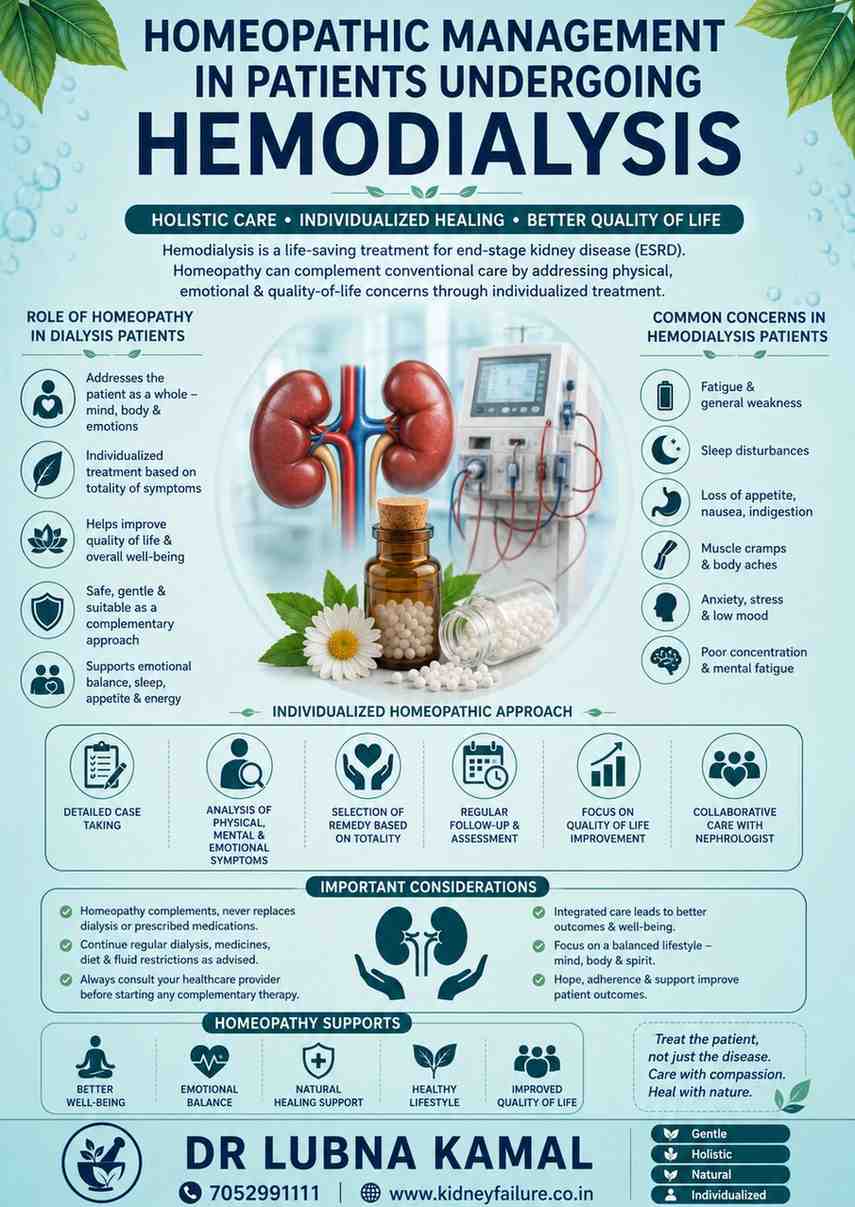
Chronic Kidney Disease (CKD) is a major global health concern affecting millions of people worldwide. As kidney function progressively declines, many patients eventually require hemodialysis to perform the essential filtration functions normally carried out by healthy kidneys. While dialysis helps sustain life, patients often experience numerous physical and emotional challenges, including fatigue, weakness, sleep disturbances, anxiety, loss of appetite, muscle cramps, and reduced quality of life.
Homeopathy is often sought as a complementary approach to support overall well-being in patients undergoing hemodialysis. By focusing on individualized symptom assessment, homeopathic treatment aims to address the patient's physical, mental, and emotional state alongside conventional medical care.
Understanding Hemodialysis
Hemodialysis is a medical procedure used to remove waste products, excess fluids, and toxins from the blood when the kidneys can no longer perform these functions adequately. Most patients with End-Stage Renal Disease (ESRD) require regular dialysis sessions, typically three times per week.
Although dialysis is life-saving, patients commonly report:
- Persistent fatigue
- General weakness
- Muscle cramps
- Sleep disorders
- Nausea and poor appetite
- Anxiety and depression
- Restlessness
- Reduced quality of life
These symptoms often affect daily functioning and psychological well-being.
Role of Homeopathy in Hemodialysis Patients
Homeopathy does not replace dialysis or conventional nephrology care. Instead, it may be used as a supportive and complementary therapy aimed at improving patient comfort and quality of life.
The homeopathic approach emphasizes:
Individualized Treatment
Each patient is evaluated based on their unique symptom pattern, personality traits, emotional state, and medical history. Treatment is selected according to the principle of individualization rather than solely on the disease diagnosis.
Holistic Care
Homeopathy considers the patient as a whole, addressing physical complaints as well as emotional concerns such as fear, anxiety, irritability, and depression commonly associated with chronic illness.
Quality of Life Enhancement
Many patients seek homeopathic care for support in managing symptoms that affect day-to-day living, including fatigue, sleep disturbances, digestive complaints, and emotional stress.
Common Symptoms Addressed in Homeopathic Practice
Homeopathic practitioners may evaluate symptoms such as:
- Chronic fatigue and weakness
- Loss of appetite
- Sleep disturbances
- Anxiety and emotional stress
- Muscular cramps
- Digestive discomfort
- Restlessness
- Reduced mental concentration
The choice of remedy is based on the totality of symptoms presented by the patient.
Importance of Integrated Care
Patients undergoing hemodialysis should continue all prescribed medical treatments, dialysis schedules, dietary recommendations, and nephrologist consultations. Any complementary therapy, including homeopathy, should be used under professional guidance and in coordination with the healthcare team.
Integrated care involving nephrologists, dietitians, dialysis specialists, and qualified homeopathic practitioners can help address both medical and quality-of-life concerns.
Lifestyle Measures for Hemodialysis Patients
In addition to medical treatment, patients may benefit from:
- Following prescribed fluid restrictions
- Adhering to renal diet recommendations
- Monitoring blood pressure regularly
- Maintaining physical activity as tolerated
- Practicing stress-management techniques
- Ensuring adequate sleep
- Attending scheduled dialysis sessions consistently
Conclusion
Hemodialysis remains an essential treatment for patients with advanced kidney disease. While it effectively replaces critical kidney functions, many patients continue to experience physical and emotional challenges. Homeopathy may serve as a complementary approach aimed at individualized symptom management and overall well-being. When used responsibly alongside conventional medical care, it may contribute to improved comfort and quality of life for selected patients undergoing hemodialysis.



