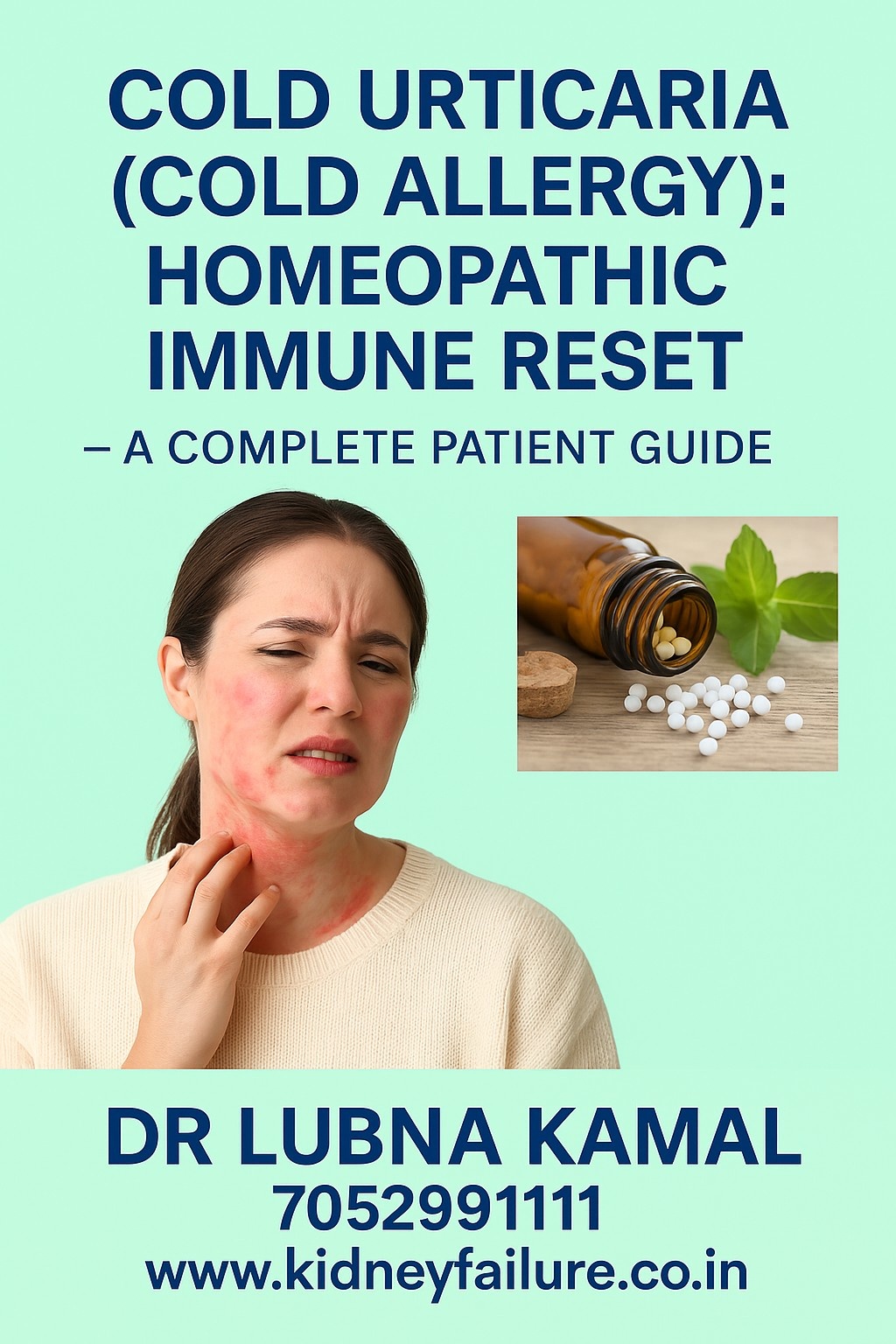
Cold Urticaria (Cold Allergy): Homeopathic Immune Reset – A Complete Patient Guide
Cold weather brings comfort to many, but for some people, even a slight exposure to cold air, cold drinks, or cold water can trigger an alarming skin reaction. This condition is known as Cold Urticaria, often called Cold Allergy. In this form of hypersensitivity, the skin reacts abnormally to low temperatures by developing red, itchy, raised welts. For many patients, these flare-ups appear suddenly and disappear within minutes, but repeated episodes can be exhausting, embarrassing, and distressing.
Modern lifestyle, changing climate, weakened immunity, and genetic tendencies are some of the reasons why cold-induced allergies are increasing. Homeopathy offers a gentle, long-term approach by focusing on immune reset, reducing sensitivity to cold, and strengthening the body’s internal tolerance. This article explains the condition in simple language so patients can understand the triggers, symptoms, complications, and homeopathic management options.
What Is Cold Urticaria?
Cold Urticaria is a skin reaction that occurs after exposure to cold temperatures. The moment the skin comes into contact with cold air, cold water, ice, refrigerated items, or sudden temperature changes, the body releases histamine and other inflammatory chemicals. This results in:
- Red, itchy bumps
- Burning sensation
- Localized swelling
- Sudden flushing on exposed skin
In some individuals, symptoms appear instantly; in others, they show up after a few minutes of exposure. The severity differs from person to person. Some experience only mild itching, while others may suffer from severe allergic responses.
Why Does This Allergy Happen? Causes & Triggers
Doctors are still studying why certain people react so strongly to cold. However, some known associations include:
1. Immune System Hyper-reactivity
The body becomes overly sensitive to cold temperatures and misidentifies them as harmful. Homeopathy aims to address this root imbalance.
2. Genetic Tendencies
Some people inherit the tendency to develop urticaria or hypersensitivity disorders.
3. Post-Infection Immune Changes
Viral infections, prolonged antibiotic courses, and chronic illnesses sometimes alter normal immune responses.
4. Skin Exposure to Low Temperatures
Cold wind, sudden temperature changes, cold water showers, and swimming in cold water commonly trigger flare-ups.
5. Autoimmune Associations
In some patients, Cold Urticaria is linked with autoimmune diseases in which the immune system attacks normal tissues.
Common Symptoms of Cold Allergy
Cold Urticaria symptoms usually appear within minutes. You may notice:
- Red, itchy patches
- Swelling of hands, face, and exposed body parts
- Lips swelling after drinking cold water
- Hives developing after washing hands with cold water
- Burning or painful skin
- Sudden fatigue after cold exposure
- Severe itching upon coming inside after being outdoors
How Is Cold Urticaria Diagnosed?
The diagnosis is often clinical. A simple test, known as the Ice Cube Test, is done by placing an ice cube on the skin for 1–5 minutes. If a red, raised welt forms after the ice is removed, Cold Urticaria is confirmed.
Doctors may also recommend tests to rule out underlying conditions if symptoms are severe.
Complications If Cold Allergy Is Ignored
Cold Urticaria may look like a simple skin problem, but ignoring it can lead to complications such as:
- Chronic hives and recurrent flare-ups
- Anxiety about stepping outdoors
- Swelling that affects daily routine
- Allergic reactions during winters
- Risk of anaphylaxis while swimming in cold water
- Constant discomfort reducing quality of life
Homeopathic Approach: Resetting the Immune Response
Homeopathy works differently from antihistamines or steroid creams. Instead of suppressing symptoms, homeopathic medicines aim to:
- Reduce hypersensitivity to cold
- Help the skin respond normally to temperature changes
- Improve long-term immunity
- Minimize relapse tendency
- Restore internal balance
Homeopathy is especially helpful for chronic, recurrent cases.
How Homeopathy Helps in Cold Urticaria
1. Individualized Treatment
Every patient with Cold Urticaria is unique. One may develop welts on the face, while another reacts on hands. Homeopathy considers the person’s constitution, history, triggers, and emotional patterns.
2. Long-Term Reduction in Cold Sensitivity
With correct homeopathic remedies, many patients experience reduced reactions over time.
3. Safe & Non-Toxic
Homeopathic medicines have no side effects and can be used long-term.
4. Holistic Immune Reset
Homeopathy promotes a stable immune response so the body becomes less reactive to cold temperatures.
Conclusion: Homeopathic Immune Reset for Lasting Relief
Cold Urticaria can disrupt day-to-day life, especially in winter months. The unpredictable symptoms and fear of flare-ups make even simple tasks difficult. Homeopathy offers a safer, long-term solution by reducing cold sensitivity, calming the overactive immune system, improving skin response, and preventing relapses.



