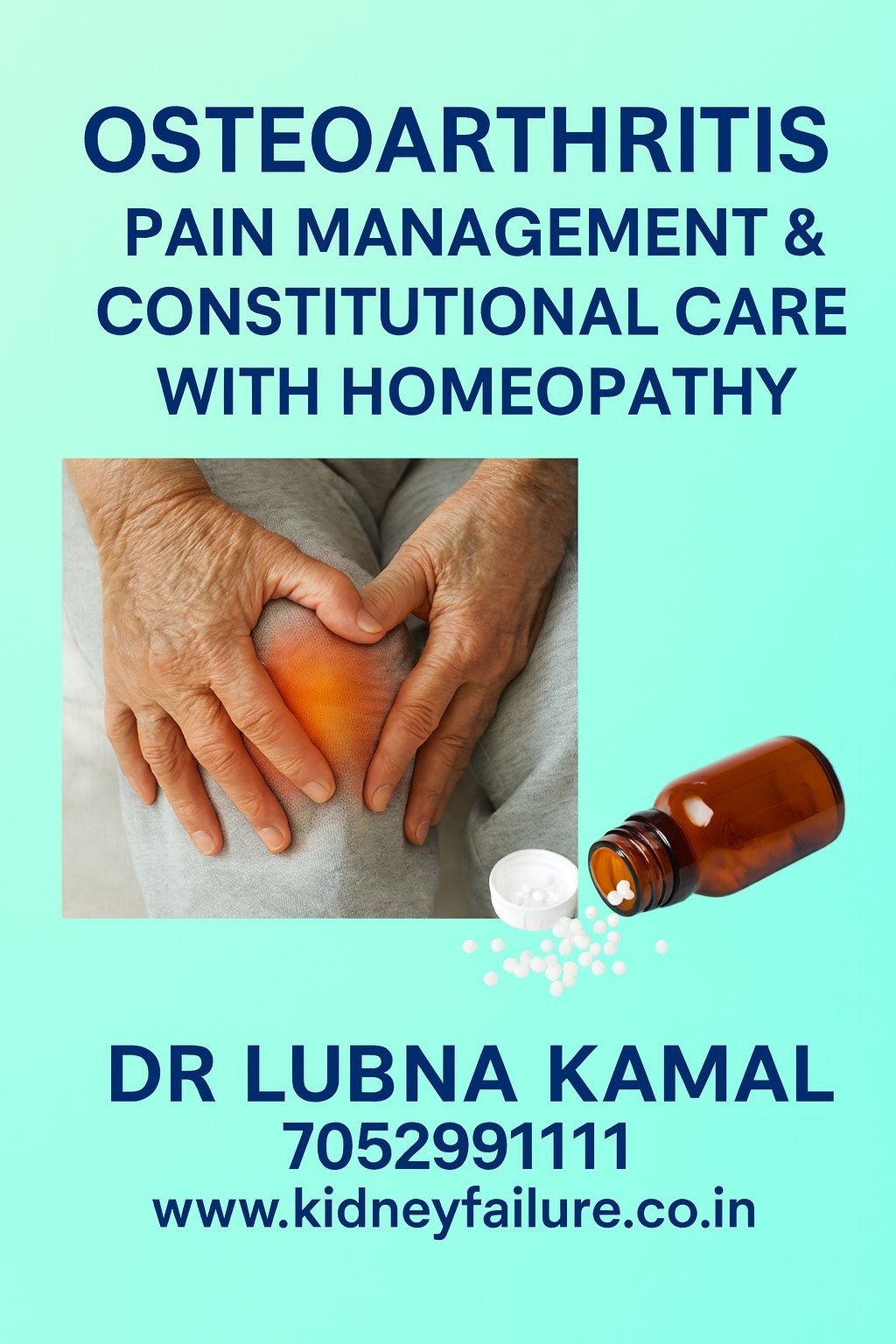
Osteoarthritis: Pain Management & Constitutional Care with Homeopathy
Osteoarthritis (OA) is one of the most common joint disorders affecting millions of people across the world, especially after the age of forty. It is often referred to as “wear and tear” arthritis, but the condition is far more complex than simple usage of the joints. Osteoarthritis involves gradual thinning of cartilage, inflammation of surrounding tissues, and bony changes that collectively produce stiffness, swelling, and chronic pain.
Understanding Osteoarthritis
Osteoarthritis is a chronic degenerative condition affecting the cartilage that cushions the ends of bones. When this cartilage gradually wears away, bones begin to rub against each other, leading to pain, stiffness, and sometimes visible deformities. The joints most commonly affected include:
- Knees
- Hips
- Hands (especially finger joints and thumb base)
- Spine (neck and lower back)
Key Causes of Osteoarthritis
Osteoarthritis doesn’t start from a single reason. Instead, it develops because of multiple contributing factors:
1. Ageing – Natural wear and tear of cartilage becomes more pronounced with age.
2. Genetics – A family history of osteoarthritis increases the chances.
3. Obesity – Excess weight puts additional pressure on weight-bearing joints, especially knees and hips.
4. Previous Injuries – Joint fractures, ligament tears, or sports injuries can trigger early degeneration.
5. Overuse of joints – Repetitive stress due to occupation or sports can damage cartilage.
Common Signs & Symptoms of Osteoarthritis
Osteoarthritis develops slowly and may begin with mild stiffness or morning pain. Over time, symptoms become more noticeable:
- Pain in joints, especially during movement or after prolonged activity
- Morning stiffness lasting less than 30 minutes
- Reduced flexibility or range of motion
- Grating sensation or crackling sounds while moving the joint
- Swelling or mild inflammation around the affected area
- Joint tenderness when pressure is applied
- Hard bony enlargements (nodes) in fingers
Early recognition of these symptoms helps in choosing appropriate treatment before the disease becomes severe.
Conventional Pain Management vs. Homeopathy
Modern medicine usually focuses on symptomatic relief through analgesics, anti-inflammatory drugs (NSAIDs), physiotherapy, and in some severe cases, joint replacement surgery. Although these options reduce pain, they do not target the underlying constitutional weakness or tendency toward degeneration.
Homeopathy, on the other hand, offers a dual approach:
1. Acute management – Relief from pain, stiffness, and inflammation
2. Constitutional treatment – Strengthening the individual’s vitality, improving metabolism, and addressing chronic tendencies that contribute to joint degeneration
Constitutional Homeopathic Care for Osteoarthritis
While acute remedies provide quick relief, true healing in homeopathy happens through constitutional prescribing — a method where medicines are chosen based on a person’s physical health, mental characteristics, emotional patterns, body structure, and inherited tendencies.
Why Constitutional Treatment Matters
It addresses the root cause and prevents progression
Improves metabolism and joint nutrition
Enhances immunity and general energy
Reduces inflammation and slows cartilage wear
Helps patients with long-standing arthritis avoid dependency on painkillers
Lifestyle & Natural Measures Along with Homeopathy
Homeopathic treatment works best when accompanied by healthy habits:
1. Maintain a Healthy Weight
Reducing even a small amount of weight reduces pressure on knees and hips. Weight management is crucial in osteoarthritis treatment.
2. Gentle Exercise
Low-impact exercises strengthen muscles and improve joint mobility. Recommended activities include:
- Walking
- Swimming
- Yoga
- Light cycling
3. Warm Compress & Massage
Warm applications soothe stiffness and improve blood flow. Gentle oil massage also helps.
4. Balanced Diet
Include:
- Anti-inflammatory foods (turmeric, ginger, garlic)
- Omega-3 rich foods (fish, flaxseed)
- Calcium and vitamin D sources
- Avoid excessive sugar, refined flour, and deep-fried foods.
5. Adequate Hydration
Joint cartilage needs proper hydration to function smoothly.
6. Posture Correction
Avoid prolonged sitting and adopt ergonomic practices.



