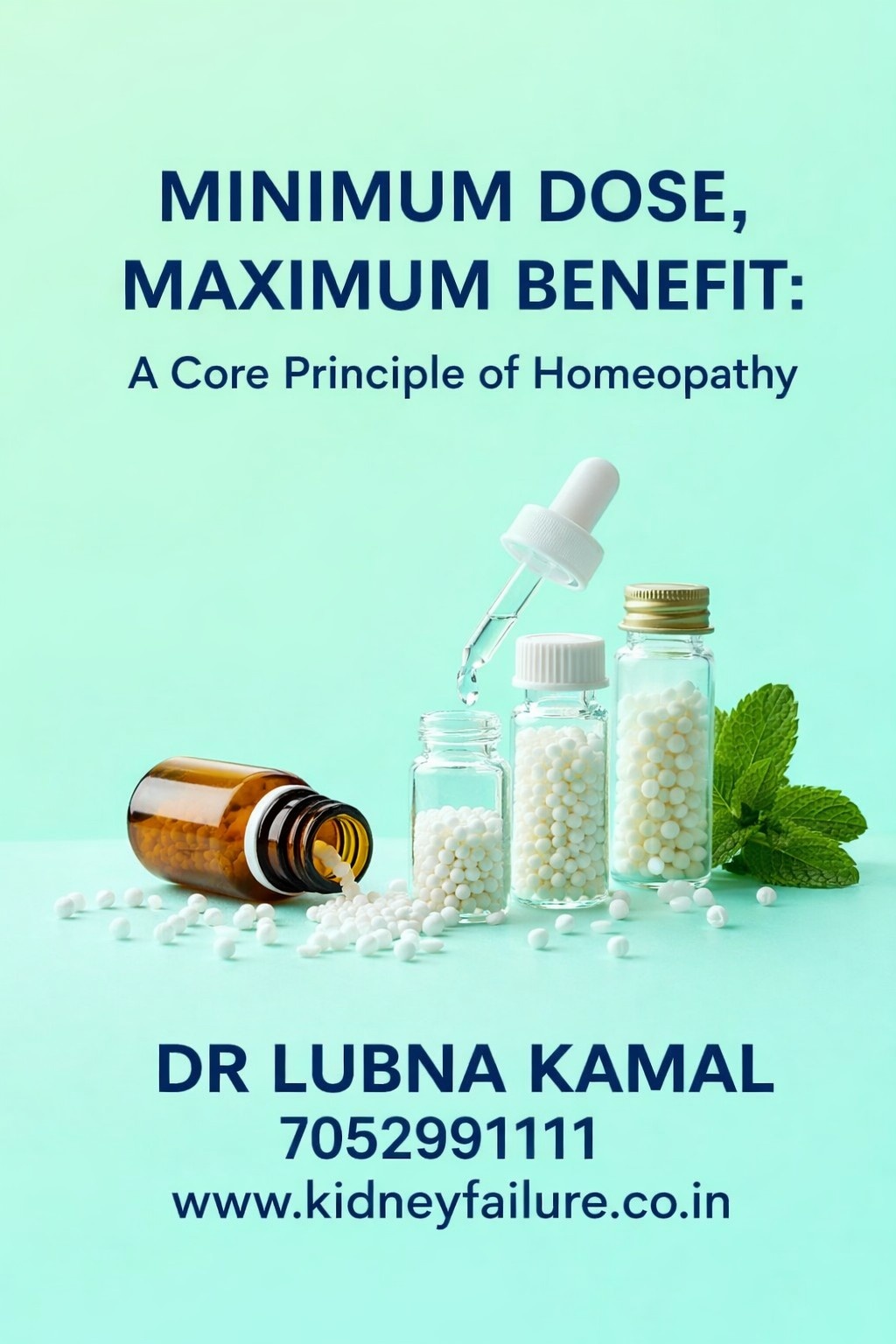
Minimum Dose, Maximum Benefit: A Core Principle of Homeopathy
Homeopathy is a system of medicine that has stood the test of time for more than two centuries. One of its most distinctive and often discussed concepts is the principle of minimum dose with maximum benefit. For patients exploring gentle, holistic, and individualized healthcare options, understanding this principle helps remove confusion and builds trust in homeopathic treatment.
Understanding the Principle of Minimum Dose in Homeopathy
The minimum dose principle in homeopathy means using the smallest possible quantity of a medicine that is capable of stimulating the body’s natural healing response. Unlike conventional medicine, which often relies on repeated or high doses to suppress symptoms, homeopathy aims to activate the body’s own defense and recovery mechanisms.
This principle was formulated and systematized by Samuel Hahnemann, the founder of homeopathy. Through years of observation and clinical practice, he recognized that larger doses often caused unwanted side effects, while carefully prepared minimal doses produced deeper, longer-lasting healing.
Why Does Homeopathy Use Such Small Doses?
Many patients wonder how such tiny doses can work. The answer lies in the philosophy and method of homeopathy, not in chemical concentration alone.
Homeopathic medicines are prepared through a specific process called potentization, which involves stepwise dilution and vigorous shaking (succussion). This process is believed to enhance the medicinal energy of the substance while removing its toxic effects.
Minimum Dose and Maximum Benefit: How It Works
Homeopathy follows the idea that the body already has the intelligence to heal itself. Disease occurs when this balance is disturbed. The correctly selected homeopathic remedy, even in a very small dose, acts as a signal that reminds the body how to restore balance.
Rather than forcing a change, the remedy stimulates the vital force (the body’s self-regulating energy). Once stimulated, the body begins correcting the imbalance from within.
Role of the Homeopathic Doctor
The success of the minimum dose principle depends heavily on:
Proper case-taking
Individualized remedy selection
Correct potency choice
Judicious repetition
A trained homeopathic physician understands when to give, when to wait, and when to stop—a crucial aspect often overlooked.
Conclusion
The principle of minimum dose with maximum benefit is not just a technical concept—it is the heart of homeopathy. It reflects respect for the human body, trust in its healing capacity, and a commitment to safe, gentle, and effective treatment.
For patients seeking a holistic, individualized, and sustainable approach to health, this principle explains why homeopathy continues to remain relevant and trusted across generations.



