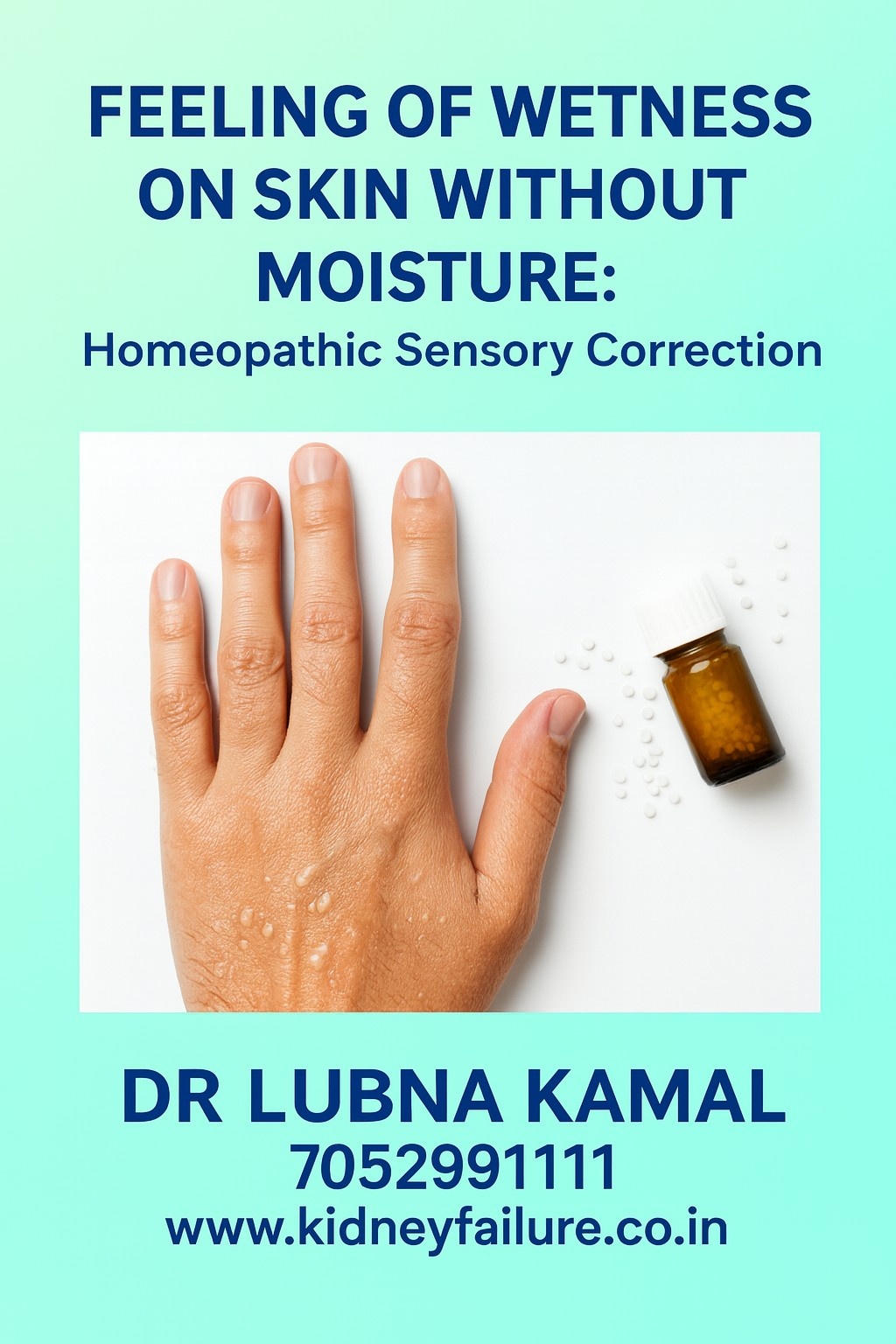
Feeling of Wetness on Skin Without Moisture: Homeopathic Sensory Correction
Many people experience a strange, confusing sensation—a feeling of wetness on the skin even though the skin is completely dry. It may appear suddenly, occur in episodes, or persist for weeks. Some describe it as droplets on the skin, others feel as if a patch of their body is damp, cool, or lightly splashed with water. When they check, there is no actual moisture present.
Although this symptom can be disturbing, most individuals hesitate to talk about it, fearing it may sound unusual. In reality, this sensation—often linked to nerve sensitivity, sensory misinterpretation, or heightened stress responses—is far more common than people realize.
What Does “Feeling of Wetness Without Moisture” Mean?
The medical term for false sensations is paresthesia. Most people associate paresthesia with numbness, tingling, or pins-and-needles sensations. However, sensory changes can present in many ways—including an illusory feeling of dampness.
People typically describe it as:
A cool wet spot on the arm, leg, face or scalp
A sensation like sweat, even though the skin is dry
A feeling of water trickling
A patchy cold-moist feeling
Sudden wetness that appears and disappears
This symptom rarely indicates a dangerous disease, but patients find it distressing because the brain is perceiving a sensation that doesn’t exist.
Common Associated Symptoms
Many patients reporting this symptom also experience:
Tingling or crawling sensations
Sudden temperature shifts (cold or warm patches)
Skin tightness or pulling sensation
Anxiety or stress
Heightened awareness of bodily sensations
Fatigue or sleep disturbances
Such symptoms indicate a sensory misfiring or nerve over-responsiveness, which homeopathy addresses through constitutional and individualized treatment.
Possible Causes of Dry Skin Wetness Sensation
This strange sensory experience may come from several physiological and emotional factors. Understanding them helps reduce fear and promotes better treatment outcomes.
1. Nerve Irritation or Sensory Misfiring
Minor issues in peripheral nerves can lead to incorrect messaging to the brain. When sensory nerves send mixed signals, the brain may interpret them as wetness, coldness, sweating, or dripping.
2. Stress and Anxiety
Stress hormones can heighten nerve sensitivity. People under chronic stress often report unusual sensations, including:
Sudden cold patches
Feeling of dripping water
Sensation of “wet socks” or “wet sleeves”
This is due to overactive sensory pathways, not actual skin changes.
3. Vitamin Deficiencies
Low levels of Vitamin B12, B6, or Vitamin D can affect nerve function, producing odd sensory symptoms.
4. Circulatory Variations
Temporary fluctuations in blood flow may cause localized cool sensations interpreted as wetness.
5. Skin Hyper-Awareness
People who frequently monitor symptoms or worry about diseases tend to develop heightened sensory attention, amplifying small nerve signals.
6. Neurological Conditions (rare)
In very rare cases, persistent paresthesias may be related to neurological disorders. However, most patients experience benign and reversible causes.
Homeopathy’s Perspective: Correcting Sensory Distortions Naturally
Unlike conventional treatment that focuses solely on nerve pathways, homeopathy views sensory distortions as a sign of imbalance in the mind–body system. Homeopathic medicines work by:
Calming hypersensitive nerves
Reducing anxiety-driven nerve overactivity
Improving microcirculation
Helping the body interpret sensations correctly
Rebalancing emotional states that influence nerve responses
The goal is not to suppress the symptom temporarily but to rectify the root imbalance.
When Should You Consult a Homeopathic Doctor?
Seek professional evaluation if:
The sensation occurs daily
It spreads or worsens
You experience tingling, burning, or numbness
Anxiety increases
You have underlying health conditions
Early assessment helps determine the most suitable constitutional remedy.
Why Homeopathy Is a Preferred Approach for This Symptom
Patients choose homeopathy because:
Remedies are safe and non-addictive
Suitable for long-term nerve regulation
Work on emotional as well as physical levels
Offer individualized treatment
Address root imbalances, not just symptoms
Restoring proper sensory interpretation gives patients confidence and relief, helping them return to a normal, calm, and stable daily routine.



