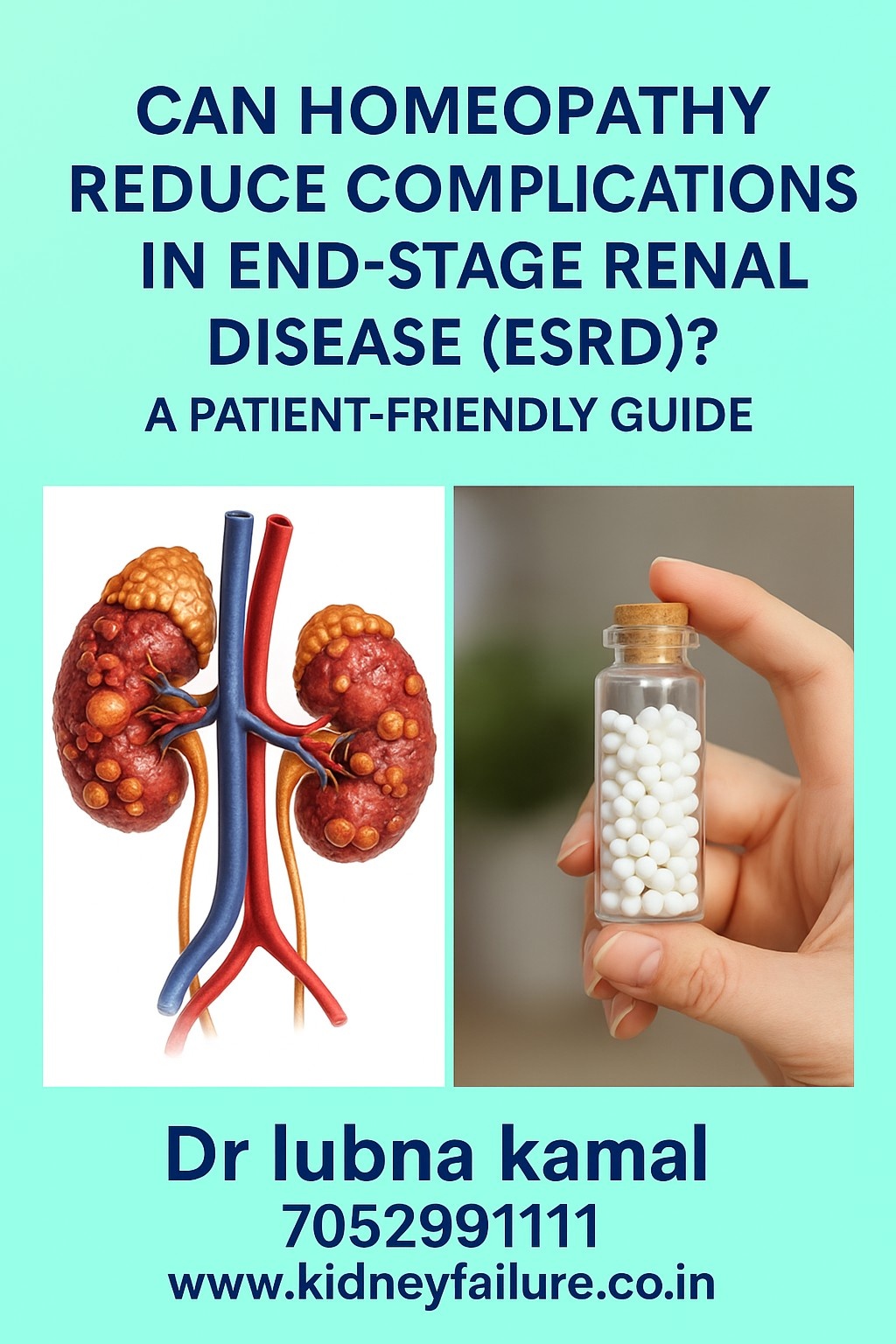
Can Homeopathy Reduce Complications in End-Stage Renal Disease (ESRD)? A Patient-Friendly Guide
End-stage renal disease (ESRD) is one of the most challenging phases of chronic kidney disease. At this stage, the kidneys are functioning at less than 10–15% of their normal capacity, and the patient usually depends on dialysis or considers a kidney transplant. Along with these medical interventions, many patients search for supportive therapies that can help improve their comfort, reduce complications, and enhance quality of life. Homeopathy is one such system of medicine that people often turn to for relief.
Understanding End-Stage Renal Disease (ESRD)
Before exploring homeopathy’s role, it's important to understand what ESRD actually is.
Your kidneys perform several vital tasks every minute of your life. They filter waste, manage fluids, maintain electrolyte balance, and regulate hormones that control blood pressure, blood formation, and bone strength. When kidneys fail gradually (a condition called chronic kidney disease), the damage progresses through five stages. ESRD appears at Stage 5, when the kidneys lose nearly all functional capacity.
Common Causes of ESRD
- Diabetes
- Long-standing high blood pressure
- Glomerulonephritis
- Polycystic kidney disease
- Obstructive kidney problems
- Autoimmune diseases
Complications of ESRD
Patients living with ESRD often face:
- Fluid overload
- Constant fatigue
- Nausea and vomiting
- Weak bones
- Severe itching
- Poor appetite
- Breathlessness
- Anemia
- Sleep disturbances
- High blood pressure
- Frequent infections
Can Homeopathy Help in ESRD?
Homeopathy cannot reverse kidney failure or regenerate severely damaged kidney tissue. However, it may play a supportive role by:
1. Reducing Symptom Burden
Many ESRD symptoms—such as itching, nausea, poor sleep, restlessness, burning sensations, digestive issues, and breathlessness—may improve with individualized homeopathic treatment. These remedies aim to strengthen the patient’s vitality and comfort.
2. Improving Quality of Life
Even with dialysis, many patients struggle with loss of appetite, weakness, depression, and anxiety. Homeopathic remedies are often used to:
- Improve appetite
- Reduce emotional stress
- Enhance energy levels
- Ease the mental burden of chronic illness
3. Managing Complications Holistically
Some homeopathic medicines are traditionally used to support:
- Fluid balance
- Metabolic disturbances
- Edema
- Digestive irregularities
- Skin issues
- Sleep problems
While these remedies do not replace dialysis or medical treatment, they may help the patient cope better, leading to a smoother experience.
4. Complementing Ongoing Treatment
Safe and gentle homeopathic remedies can be taken alongside dialysis or allopathic medicines when prescribed by a qualified homeopath. Many patients report better tolerance to dialysis and fewer discomforts when both systems are integrated responsibly.
How Homeopathy Supports Patients Emotionally
Living with ESRD can be emotionally exhausting. The need for frequent hospital visits, dietary restrictions, the dependence on machines, and worries about the future can significantly affect mental health. Homeopathy pays close attention to the emotional state of the patient, including:
- Fear of dialysis
- Anxiety about survival
- Depression caused by long-term illness
- Irritability or mood swings
- Hopelessness
Is Homeopathy Safe for ESRD Patients?
Generally, homeopathic medicines are considered safe because they are highly diluted and gentle. However:
- Not all homeopathic medicines are safe for severe kidney disease.
- Certain tinctures or crude preparations may burden kidneys.
- Self-treatment can be risky.
- Only high-dilution remedies should be used under expert supervision.



