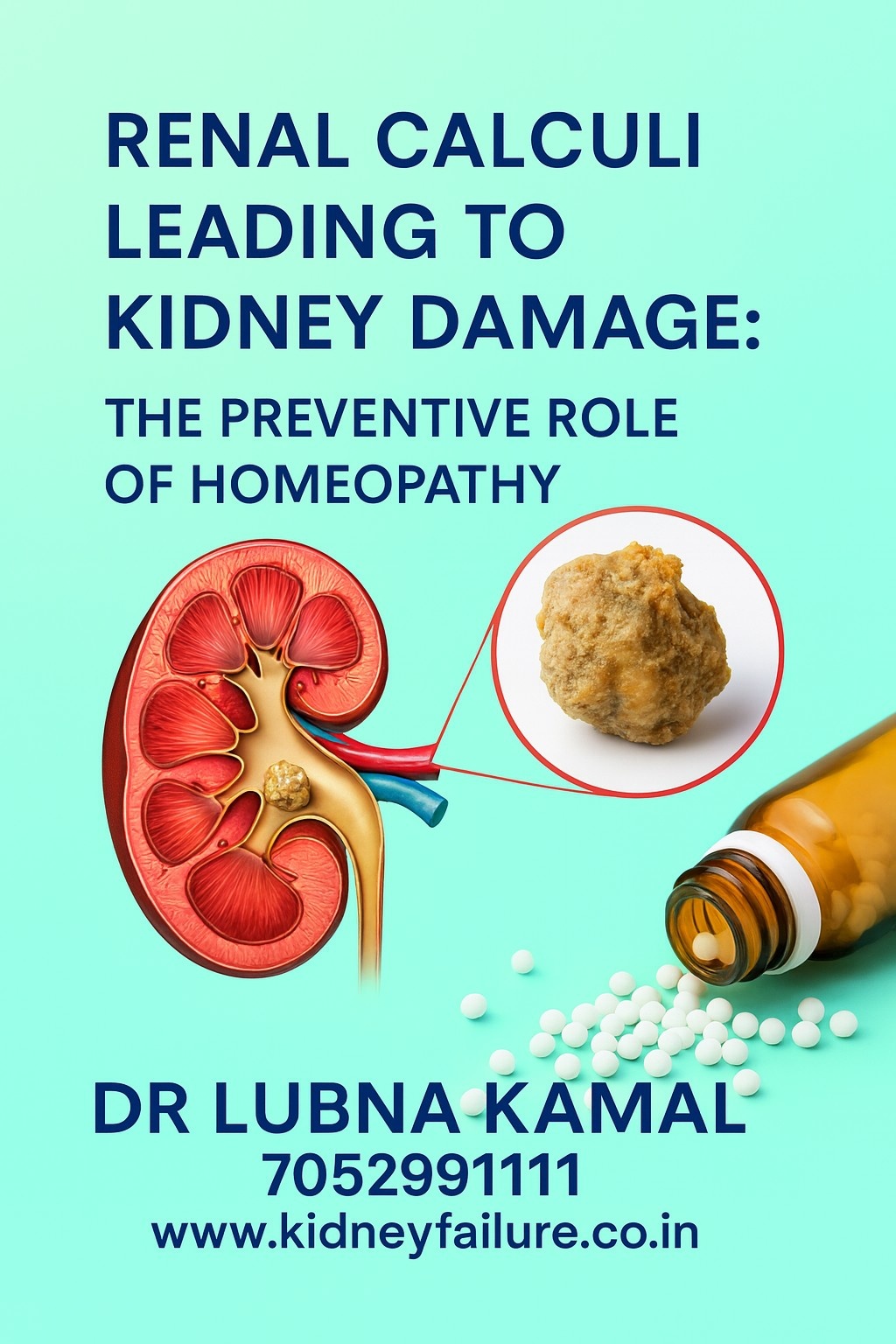
Renal Calculi Leading to Kidney Damage: The Preventive Role of Homeopathy
Kidney stones, medically known as renal calculi, have become one of the most common urinary disorders affecting people worldwide. Many individuals experience sudden, sharp pain, burning urination, nausea, or blood in urine—symptoms that often indicate the formation of stones in the kidneys or urinary tract. While most people think kidney stones are simply a painful inconvenience, not many realize that repeated stone formation can gradually damage the kidneys, sometimes leading to severe complications such as hydronephrosis, recurrent infections, and even chronic kidney disease.
What Are Renal Calculi?
Renal calculi are solid crystal masses formed inside the kidneys due to the deposition of minerals such as calcium, uric acid, oxalate, phosphate, or cystine. These stones vary in size—from tiny grain-like particles to large stones that occupy the entire kidney pelvis.
A stone may remain in the kidney without causing symptoms, but when it shifts or obstructs urine flow, intense pain and other complaints develop. Repeated obstruction or long-term stone presence is what makes kidney stones potentially dangerous
How Kidney Stones Cause Kidney Damage
Most people think, “It’s just a stone—it will pass.”
However, the truth is more serious.
Long-standing or recurrent stones can lead to:
1. Obstruction of Urine Flow
A stone lodged in the ureter blocks urine passage. This causes pressure build-up, leading to swelling of the kidney (hydronephrosis). Persistent pressure gradually reduces kidney function.
2. Recurrent Urinary Tract Infections
Stones create a breeding space for bacteria. Frequent UTIs weaken kidney tissues and may lead to pyelonephritis, a serious kidney infection.
3. Reduction in Kidney Function
A kidney constantly working against obstruction begins to lose its filtration capacity. Over time, this may contribute to chronic kidney disease (CKD).
4. Permanent Kidney Scarring
Untreated stones, especially large ones, can scar the kidney permanently, reducing its overall health and functioning.
5. Risk of Complete Renal Failure
Though rare, untreated or recurrent stones can eventually lead to kidney failure, especially when both kidneys are affected.
Therefore, kidney stones should never be ignored. Early diagnosis and preventive care play a major role in saving kidneys from damage
Symptoms Suggesting Kidney Stone Formation
Patients may experience:
- Sudden, severe flank or back pain
- Pain radiating to the groin
- Burning urination
- Frequent urge to urinate
- Blood in urine (hematuria)
- Cloudy or foul-smelling urine
- Nausea or vomiting
- Fever or chills (indicating infection)
Why Homeopathy Is Becoming a Preferred Choice
Homeopathy offers a combination of symptomatic relief, safe stone expulsion, and long-term prevention. The medicines work by:
1. Reducing Pain Naturally
Homeopathic remedies help lessen inflammation and ease the passage of stones without causing dependency or side effects.
2. Facilitating Stone Expulsion
Certain medicines assist the body in naturally dislodging and eliminating stones through the urinary tract.
3. Preventing Stone Formation
Unlike conventional methods that primarily focus on removal, homeopathy addresses internal tendencies, such as metabolic disturbances and recurrent crystal deposition. This makes it valuable in preventing recurrence.
4. Improving Kidney Function
Homeopathic medicines help maintain kidney health and support normal filtration function.
5. Safe for All Age Groups
Children, adults, elderly patients, and even those with mild CKD can safely use homeopathy under expert guidance.
Preventive Tips to Protect the Kidneys
- 1. Increase Water Intake
- Drinking 2.5–3 liters of water daily flushes the kidneys and prevents crystal accumulation.
- 2. Limit Salt
- High sodium levels increase calcium excretion, promoting stone formation.
- 3. Reduce Oxalate-Rich Foods
- Spinach, nuts, chocolate, beets, soy products, and tea should be taken in moderation.
- 4. Maintain a Balanced Diet
- Do not eliminate calcium completely—low calcium actually increases oxalate absorption.
- 5. Avoid Excess Animal Protein
- Red meat, organ meats, and seafood increase uric acid levels.
- 6. Manage Weight and Blood Pressure
- Obesity and hypertension increase stone formation risk.
- 7. Avoid Repeated Painkillers
- Long-term use harms the kidneys.
- 8. Choose Early Homeopathic Intervention
- Homeopathy helps stop recurrence and protects kidneys from long-term damage.



