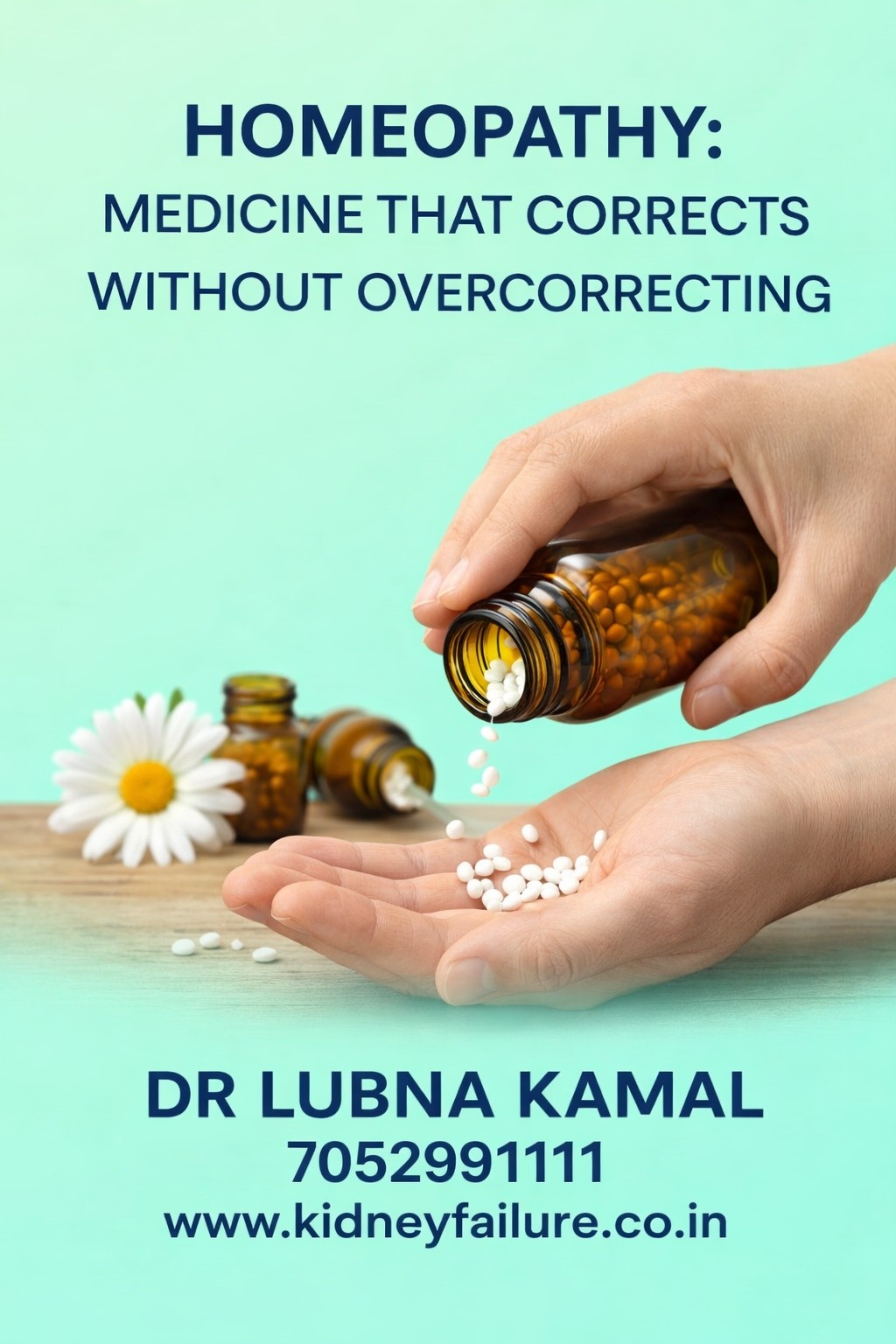
Homeopathy: Medicine That Corrects Without Overcorrecting
Introduction: When Treatment Needs Balance, Not Force
Modern healthcare has achieved remarkable progress, yet many patients today face a different challenge — overcorrection. Strong medicines may suppress symptoms rapidly, but often at the cost of new problems: side effects, dependency, or imbalance in other systems of the body. This is where many people begin to look for a gentler, more balanced approach to healing.
Homeopathy is often described as a system of medicine that works with the body rather than against it. Instead of forcing change, it aims to correct disturbances without overcorrecting, supporting the body’s natural ability to restore health. This philosophy makes homeopathy especially appealing for chronic illnesses, lifestyle disorders, hormonal imbalances, kidney conditions, digestive issues, and long-term stress-related problems.
Understanding Overcorrection in Modern Medicine
Overcorrection occurs when treatment aggressively targets symptoms rather than addressing the underlying imbalance. While this approach can be lifesaving in emergencies, it may create problems when used continuously for chronic conditions.
Common examples include:
Excessive suppression of symptoms without addressing root causes
Long-term medication leading to dependency
Side effects affecting liver, kidneys, hormones, or digestion
Masking disease progression rather than improving overall health
Many patients report that while lab values improve, they do not feel better overall. Fatigue, anxiety, digestive issues, sleep problems, and emotional disturbances may persist.
This is where patients begin asking an important question:
Is there a system of medicine that restores balance instead of forcing control?
How Homeopathy Corrects Without Overcorrecting
1. Individualized Treatment, Not One-Size-Fits-All
In homeopathy, two patients with the same diagnosis may receive completely different medicines. This prevents unnecessary interference and avoids blanket suppression of symptoms.
Each prescription is tailored to:
The patient’s constitution
Disease stage
Response pattern
Overall vitality
This precision minimizes the risk of overtreatment.
2. Gentle Stimulation of the Healing Response
Homeopathic remedies do not act by chemically blocking biological processes. Instead, they stimulate the body’s natural response mechanisms.
Because the stimulation is mild and specific:
The body is not overwhelmed
Vital organs are not stressed
Healing progresses gradually and sustainably
This is why homeopathy is often described as regulative medicine rather than suppressive medicine.
3. No Chemical Overload on Organs
One major concern with long-term conventional medication is the burden placed on organs such as:
Liver
Kidneys
Gastrointestinal tract
Homeopathic medicines are prepared in highly diluted forms and are non-toxic when used under professional guidance. They do not accumulate in organs or interfere with metabolic pathways, making them suitable for:
Elderly patients
Children
Patients with chronic kidney or liver disease
Homeopathy in Chronic and Lifestyle Disorders
Chronic diseases require long-term management, not aggressive suppression. Homeopathy is often chosen as a supportive or primary approach in conditions such as:
- Diabetes-related complications
- Thyroid disorders
- Chronic kidney disease (early and supportive stages)
- Irritable bowel syndrome
- Allergies and asthma
- Autoimmune tendencies
- Hormonal imbalance
Stress-related disorders
In these conditions, overcorrection can worsen instability. Homeopathy aims to stabilize rather than shock the system.
Safety and Compatibility with Other Treatments
Homeopathy can often be used alongside conventional medicine under medical supervision. It does not interfere with diagnostic tests or emergency treatments.
This makes it suitable for:
- Supportive care
- Long-term disease management
- Patients seeking reduced drug burden
However, professional consultation is essential for proper integration
Conclusion: Healing That Respects the Body
Homeopathy stands apart as a medical system that understands one essential truth — the body heals best when it is supported, not forced. By correcting imbalances without overcorrecting, homeopathy provides a pathway to sustainable health, especially in chronic and long-term conditions.
For patients seeking a gentler, individualized, and balanced approach to healing, homeopathy offers not just symptom relief, but a deeper restoration of health.



