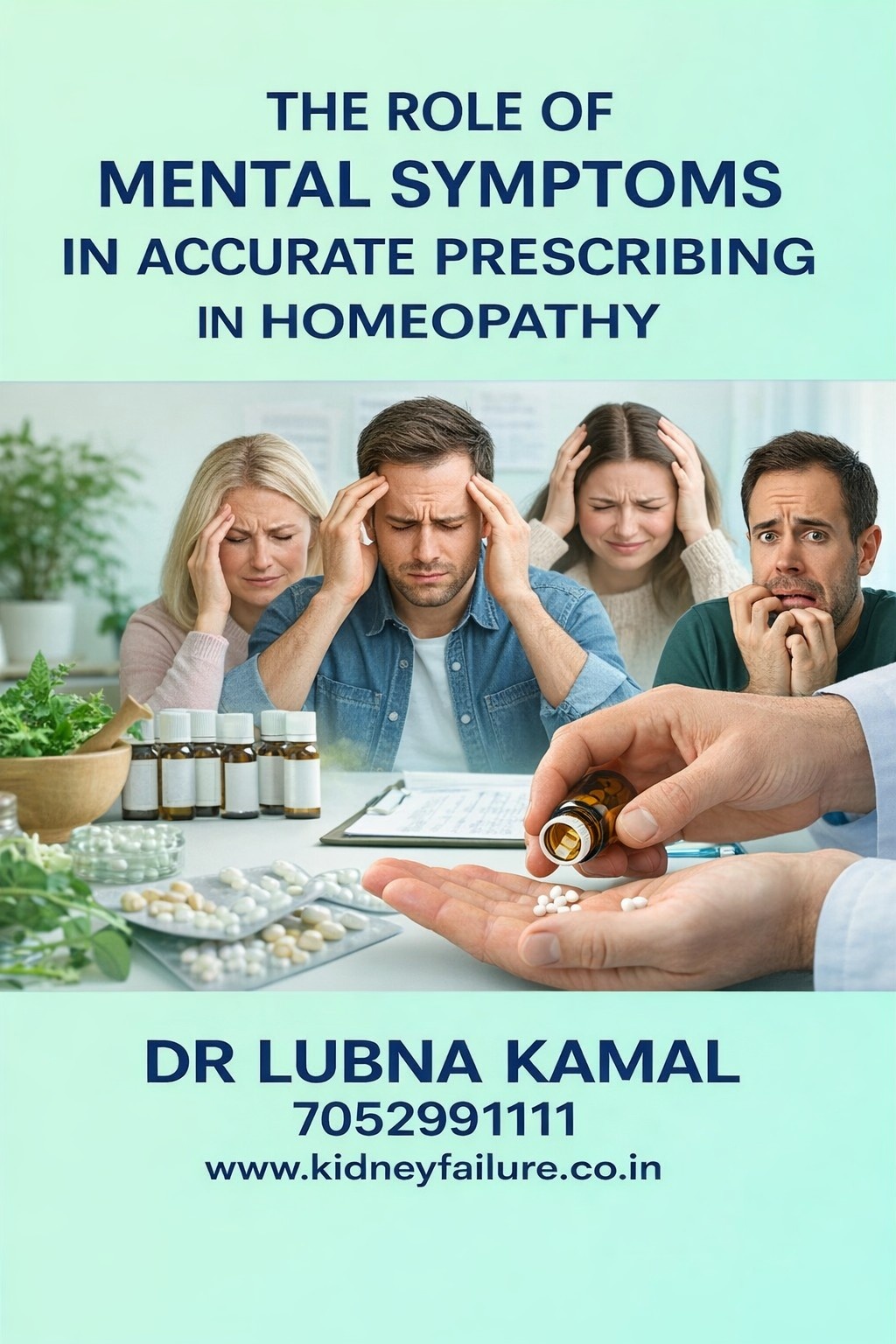
The Role of Mental Symptoms in Accurate Prescribing in Homeopathy
Introduction: Why Homeopathy Looks Beyond the Disease
When people visit a homeopathic clinic, they are often surprised by the kind of questions asked. Instead of focusing only on medical reports, scans, or lab values, the homeopathic physician may ask about fears, worries, sleep patterns, irritability, grief, sensitivity to criticism, or even how a person reacts to stress.
To a patient, these questions may seem unrelated to physical illness. But in homeopathy, they are central. Mental and emotional symptoms are not side notes—they are key guides for accurate prescribing.
Homeopathy is based on treating the individual as a whole, not just the disease label. Two people may suffer from the same condition, yet their inner experiences, emotional responses, and mental patterns may be entirely different. These differences help the physician select the most suitable remedy.
Understanding Mental Symptoms in Homeopathy
In homeopathy, mental symptoms refer to changes or patterns in a person’s:
- Emotions (fear, sadness, anger, anxiety, irritability)
- Thoughts (overthinking, suspiciousness, hopelessness)
- Behavior (restlessness, withdrawal, impatience)
- Reactions to situations (stress, grief, failure, responsibility)
- Personality traits that become more prominent during illness
These are not psychiatric labels. They are observations of how the mind responds when a person is unwell.
The Mind–Body Connection: A Core Principle of Homeopathy
Homeopathy recognizes that the mind and body are deeply connected. Emotional stress can disturb physical health, and long-standing physical illness can affect emotional balance.
Why Mental Symptoms Are Given Special Importance
Not every symptom has equal value in homeopathic prescribing. Mental symptoms are considered especially important because they are:
1. Highly individual – Physical symptoms often overlap among patients, but mental reactions are unique.
2. Closer to the core of the person – They reflect how the individual experiences life.
More stable and characteristic – A person’s emotional pattern often remains consistent over time.
3. Less influenced by external factors – Unlike pain or fever, mental symptoms are harder to suppress artificially.
Because of this, mental symptoms help the physician differentiate between remedies that may look similar at a physical level.
Mental Symptoms as a Guide in Chronic Diseases
In long-standing illnesses such as skin disorders, digestive complaints, hormonal imbalance, kidney disease, or autoimmune conditions, physical symptoms may change frequently due to medications or lifestyle factors.
What Patients Should Share During a Homeopathic Consultation
Many patients hesitate to talk about emotions, thinking they are irrelevant or too personal. In homeopathy, sharing these details helps the physician help you better
Addressing Common Misunderstandings
“Does this mean my disease is only psychological?”
No. Homeopathy recognizes physical pathology. Mental symptoms help in understanding the individual, not in denying physical illness.
“Do I need to have mental problems to benefit from homeopathy?”
No. Everyone has emotions and mental reactions. These are part of being human.
Conclusion: Treating the Person, Not Just the Problem
In homeopathy, mental symptoms are not an afterthought. They are a compass that guides the physician toward the most suitable remedy. By understanding how a person thinks, feels, and reacts, homeopathy aims to restore balance at a deeper level.



