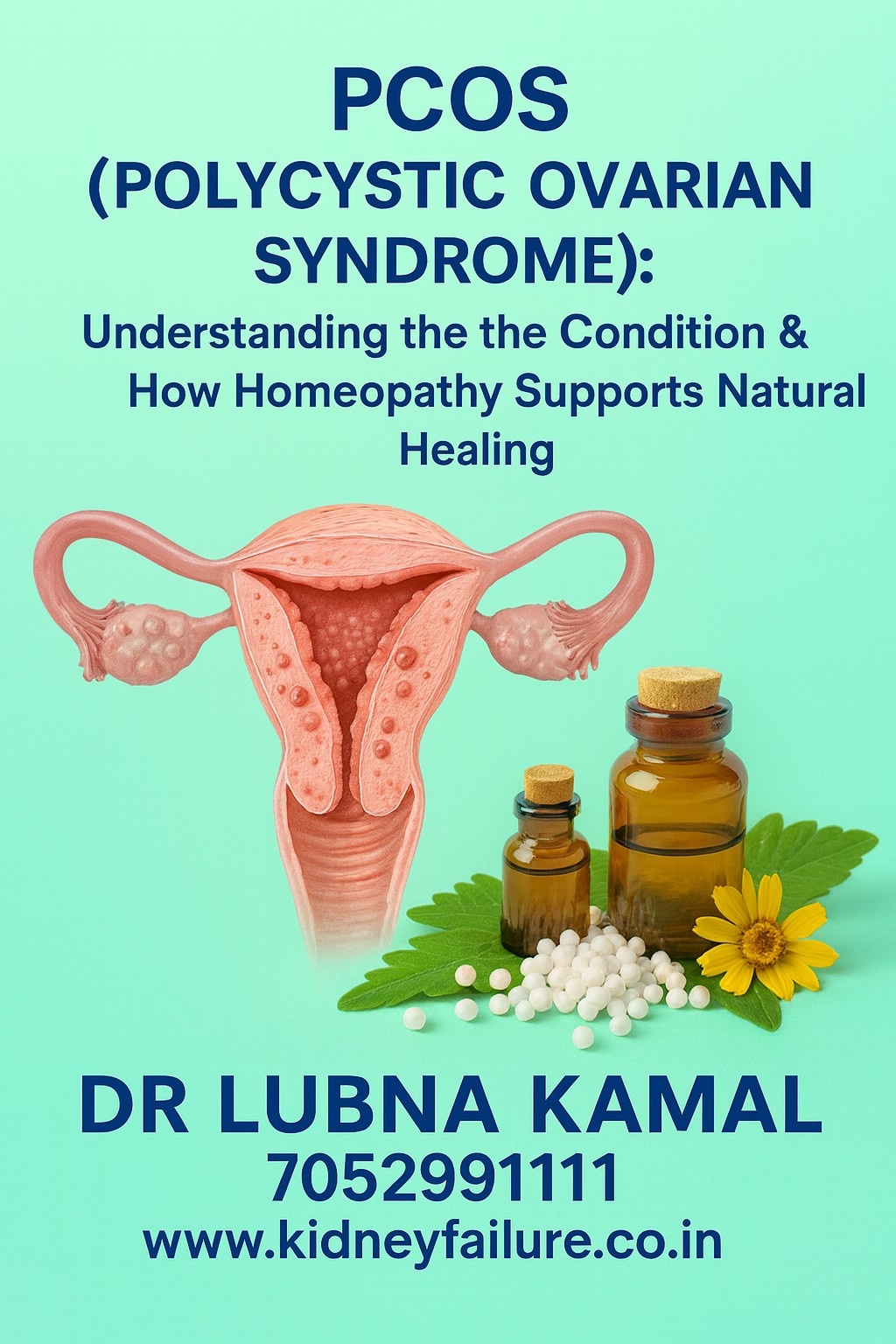
PCOS (Polycystic Ovarian Syndrome): Understanding the Condition & How Homeopathy Supports Natural Healing
Polycystic Ovarian Syndrome, commonly known as PCOS, has become one of the most frequent hormonal concerns among women today. Many young women first notice irregular periods, sudden weight gain, acne, or unexpected facial hair growth and feel confused about what is happening inside their bodies. PCOS can affect physical health, emotional balance, fertility, confidence, and even long-term metabolic health.
What Exactly Is PCOS?
PCOS is a hormonal imbalance in which the ovaries produce higher-than-normal levels of androgens (male hormones). This imbalance disrupts the monthly cycle, leading to irregular ovulation or lack of ovulation. Because the eggs do not mature properly, small fluid-filled sacs called “cysts” can develop in the ovaries.
However, here is something important:
Not every woman with PCOS will have cysts, and not every cyst in the ovary is due to PCOS. That is why proper diagnosis is essential.
Why Does PCOS Occur?
Doctors and researchers believe PCOS is related to multiple factors, such as:
1. Insulin Resistance
Many women with PCOS have difficulty using insulin effectively. This raises insulin levels, which triggers the ovaries to produce more male hormones.
2. Hormonal Imbalance
PCOS affects several hormones, including:
- LH (Luteinizing Hormone)
- FSH (Follicle Stimulating Hormone)
- Estrogen
- Progesterone
- Testosterone
When these hormones are not in balance, the menstrual cycle gets disturbed.
3. Genetic Tendency
PCOS often runs in families. If your mother, aunt, or sister has PCOS or diabetes, your chances may be higher.
4. Lifestyle Factors
Lack of physical activity, stress, poor sleep, and unhealthy diet can worsen hormonal imbalance.
Common Signs and Symptoms of PCOS
Women with PCOS may notice one or many of the following symptoms:
1. Irregular or Delayed Periods
Sometimes cycles come once in 40–60 days, or even stop for months.
2. Difficulty in Conceiving
Due to lack of ovulation, many women face challenges in pregnancy.
3. Acne & Oily Skin
Increased androgen levels cause stubborn acne, especially on the face, chest, and back.
4. Excess Facial & Body Hair (Hirsutism)
Thick hair may appear on the chin, upper lips, chest, stomach, or back.
5. Hair Thinning or Hair Fall
PCOS can cause male-pattern hair thinning on the scalp.
6. Weight Gain & Difficulty Losing Weight
Especially around the abdomen.
7. Mood Changes
Irritability, anxiety, low mood, and emotional fluctuations are common.
8. Darkening of Skin
Particularly around the neck, underarms, thighs (Acanthosis Nigricans), often linked with high insulin levels.
9. Pelvic Pain
Some women experience mild discomfort or heaviness.
Long-Term Risks if PCOS Is Not Managed
PCOS is not only a reproductive issue; it also affects overall metabolic health. If unmanaged, it can increase the risk of:
- Type-2 Diabetes
- High Blood Pressure
- High Cholesterol
- Infertility
- Endometrial hyperplasia
- Sleep disorders
- Depression & anxiety
How Is PCOS Diagnosed?
- A proper diagnosis includes:
- Medical history
- Physical examination
- Hormone blood tests
- Ultrasound of the ovaries
Role of Homeopathy in PCOS Management
Homeopathy works on the principle of treating the person as a whole rather than just the disease name. PCOS is not the same in every woman—some suffer with acne, some with weight gain, some with mood swings, and some with fertility issues. Homeopathy tailors treatment according to the individual's unique physical and emotional pattern.
When Should You Seek Help?
Consult a healthcare provider if you notice:
- Irregular cycles for more than 3 months
- Unexplained weight gain
- Excess facial hair
- Acne that does not respond to routine care
- Difficulty conceiving
- Mood changes or persistent fatigue



