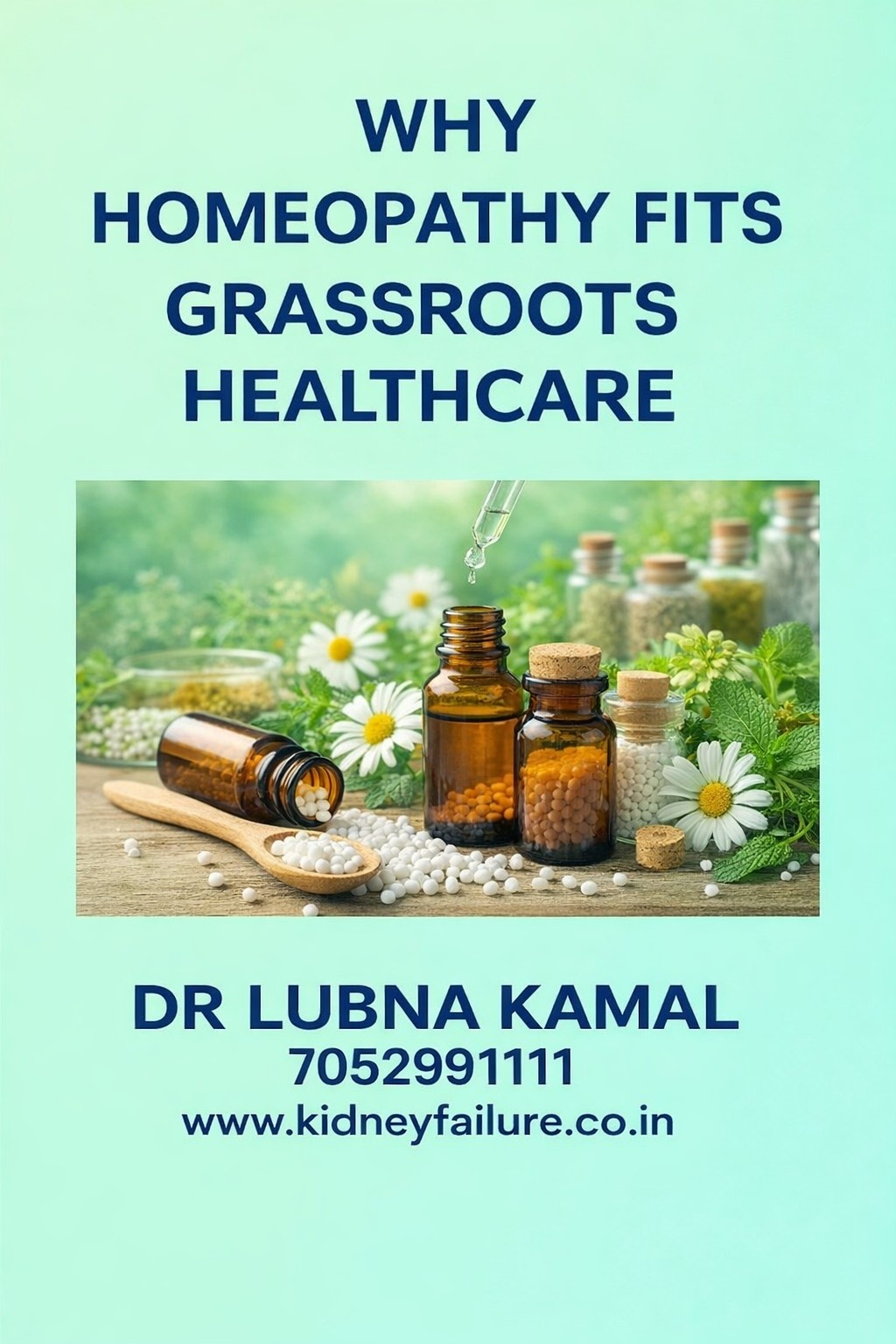
Why Homeopathy Fits Grassroots Healthcare
Healthcare at the grassroots level is not just about hospitals or advanced technology. It is about access, trust, affordability, and continuity of care. In villages, small towns, semi-urban regions, and underserved communities, people need a system of medicine that understands daily realities—financial limits, long travel distances, chronic illnesses, and emotional stress.
Homeopathy has quietly established itself as a natural partner to grassroots healthcare. Its principles, practice style, and patient-centered approach align closely with the real needs of communities where healthcare resources are limited but health challenges are many.
Understanding Grassroots Healthcare
Grassroots healthcare focuses on primary care, early intervention, and long-term management of illness within the community itself. It works best when healthcare is:
Easily accessible
Affordable for families
Simple to follow
Culturally accepted
Focused on prevention as much as cure
In many parts of India and other developing regions, grassroots healthcare is the first and often only point of medical contact. Here, treatment must be practical, safe, and sustainable.
Affordable Care Without Compromising Quality
One of the strongest reasons homeopathy works well at the grassroots level is its low cost. Consultation fees are usually affordable, medicines are inexpensive, and long-term treatment does not financially burden families.
For patients managing chronic conditions like arthritis, asthma, skin disorders, digestive problems, allergies, or hormonal imbalances, repeated visits to high-cost healthcare facilities can be overwhelming. Homeopathic treatment offers:
Cost-effective medicines
Long shelf life
Minimal repeat investigations
Affordable follow-ups
This allows even low-income families to continue treatment without interruption.
Easy Accessibility in Rural and Semi-Urban Areas
Homeopathy clinics are often found in villages, small towns, and community centers, where modern healthcare infrastructure may be limited. A homeopathic setup does not require advanced equipment, making it easier to establish clinics close to where people live.
Focus on the Person, Not Just the Disease
At the grassroots level, health problems are often linked to living conditions, nutrition, stress, occupation, and emotional well-being. Homeopathy addresses illness in a holistic way, considering the individual as a whole rather than treating isolated symptoms.
Effective for Chronic and Lifestyle Diseases
Grassroots populations increasingly face chronic illnesses due to changing lifestyles, environmental exposure, and stress. Conditions like diabetes, hypertension, thyroid disorders, skin diseases, joint pains, and digestive issues require long-term management, not just short-term relief.
Minimal Dependence on Diagnostic Infrastructure
In many rural or underserved areas, advanced diagnostic facilities are not always available. While investigations are important, homeopathy relies heavily on clinical observation, patient history, and symptom patterns.
Supporting Public Health Goals
Homeopathy complements public health initiatives by providing affordable care for common illnesses, chronic conditions, and mental health concerns. It helps reduce overcrowding in hospitals and allows healthcare systems to focus on emergency and critical cases.
Conclusion
Homeopathy fits naturally into grassroots healthcare because it respects the realities of everyday life. It is affordable, accessible, gentle, and deeply personal. By focusing on the individual rather than just the disease, it builds trust, improves compliance, and supports long-term health.
In communities where healthcare must be simple yet effective, homeopathy remains a practical and trusted choice.



