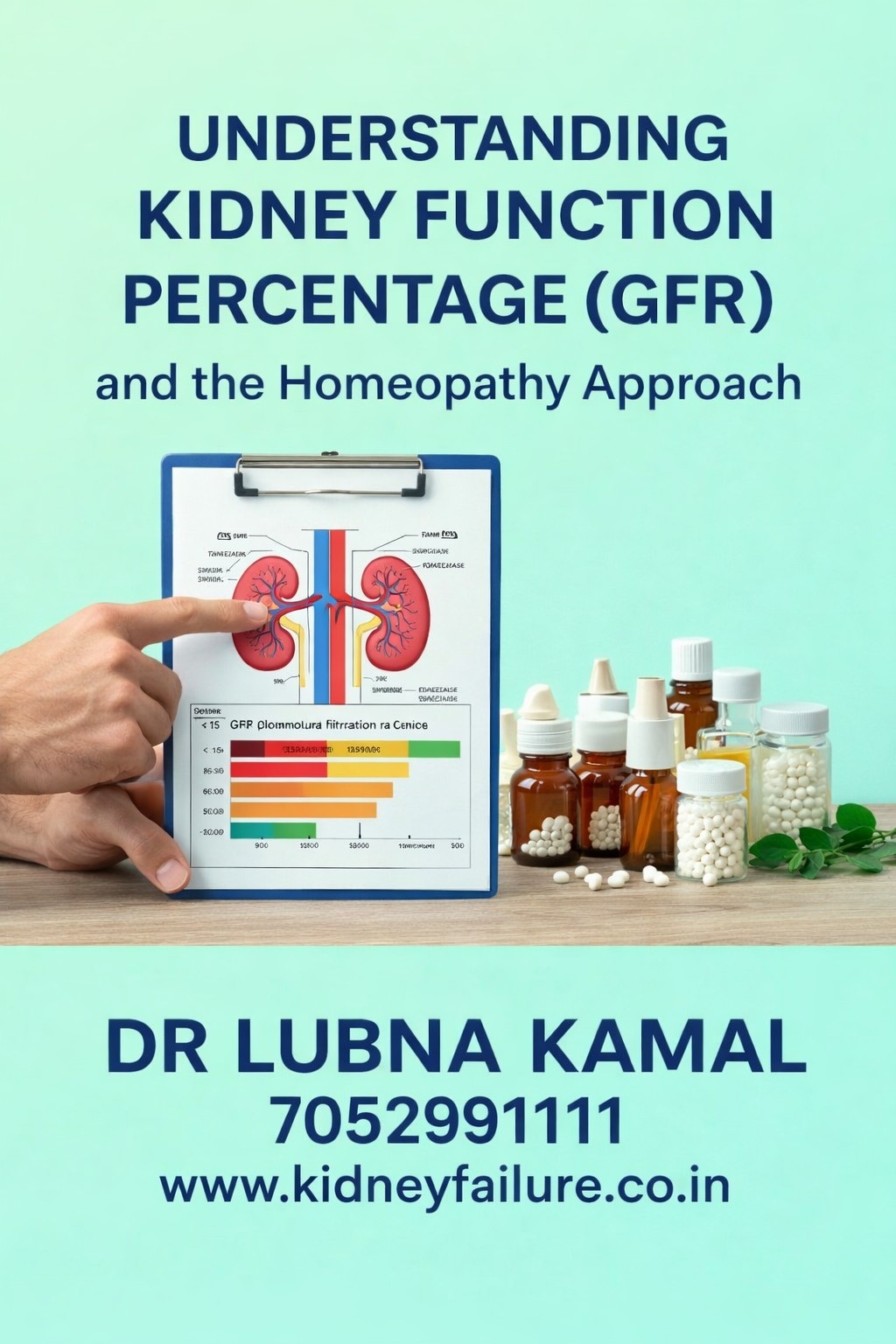
Understanding Kidney Function Percentage (GFR) and the Homeopathy Approach
Introduction
When a kidney report mentions GFR or kidney function percentage, it often creates confusion and fear. Many patients immediately think of dialysis or kidney failure, even when their condition may be stable or manageable. This article explains what GFR really means, how kidney function percentage is interpreted, and how a homeopathy-based, holistic approach can support overall kidney health alongside regular medical care. The aim is clarity, reassurance, and practical understanding—written especially for patients and caregivers
What Is GFR (Glomerular Filtration Rate)?
GFR stands for Glomerular Filtration Rate. It is an estimate of how much blood your kidneys filter every minute. In simple terms, it tells us how efficiently the kidneys are cleaning the blood.
- A higher GFR means better kidney filtration
- A lower GFR suggests reduced kidney function
Doctors usually calculate GFR from a blood test (serum creatinine) along with age, sex, body size, and sometimes race. That’s why two people with the same creatinine can have different GFR values.
Understanding Kidney Function Percentage
Patients often hear statements like “your kidney is working at 40%”. This percentage is a simplified way to explain GFR.
- 100% kidney function ≈ normal filtration
- 50% function ≈ moderate reduction
- Below 15% ≈ severe failure, often requiring dialysis consideration
This percentage does not mean the kidney suddenly stops. Kidney disease usually progresses slowly, and many people live stable lives for years with reduced function
Stages of Kidney Disease Based on GFR
Stage 1: GFR ≥ 90
Kidney function is normal, but there may be protein in urine or structural changes. Lifestyle care is most important here.
Stage 2: GFR 60–89
Mild reduction. Often symptom-free. Early intervention can slow progression.
Stage 3: GFR 30–59
Moderate kidney damage. Patients may experience fatigue, swelling, or changes in urination.
Stage 4: GFR 15–29
Severe reduction. Careful monitoring and planning are required.
Stage 5: GFR < 15
Kidney failure stage. Dialysis or transplant may be discussed, but supportive care remains essential.
The Homeopathy Perspective on Kidney Health
Homeopathy does not treat GFR as an isolated number. It views kidney disease as a result of systemic imbalance, affecting metabolism, immunity, circulation, and emotional health.
Key Principles
- Treat the person, not just the report
- Focus on root susceptibility
- Support the body’s self-regulatory capacity
This individualized approach is why two patients with the same GFR may receive different remedies.
Can Homeopathy Improve GFR?
It is important to be honest and ethical. Homeopathy does not promise miracle cures or instant normalization of GFR. However, many patients experience:
- Slower disease progression
- Stabilization of kidney function
- Improvement in symptoms like swelling, burning, fatigue
- Better quality of life
Homeopathy works best when started early and combined with proper medical monitoring.
Integrative Care: Not an Alternative, but a Support
Homeopathy should not be seen as a replacement for emergency or essential medical care. Instead, it works best as a supportive, integrative system, helping patients cope better with long-term illness.
Regular blood tests, imaging, and physician follow-ups remain crucial.
Final Thoughts
Understanding kidney function percentage and GFR helps remove unnecessary fear and confusion. Kidney disease is often a slow, manageable condition when approached with awareness, discipline, and compassionate care. A homeopathy-based approach focuses on the whole person, aiming to support physical health, emotional balance, and quality of life.
With informed choices, regular monitoring, and holistic support, many patients live meaningful and active lives—even with reduced kidney function.



