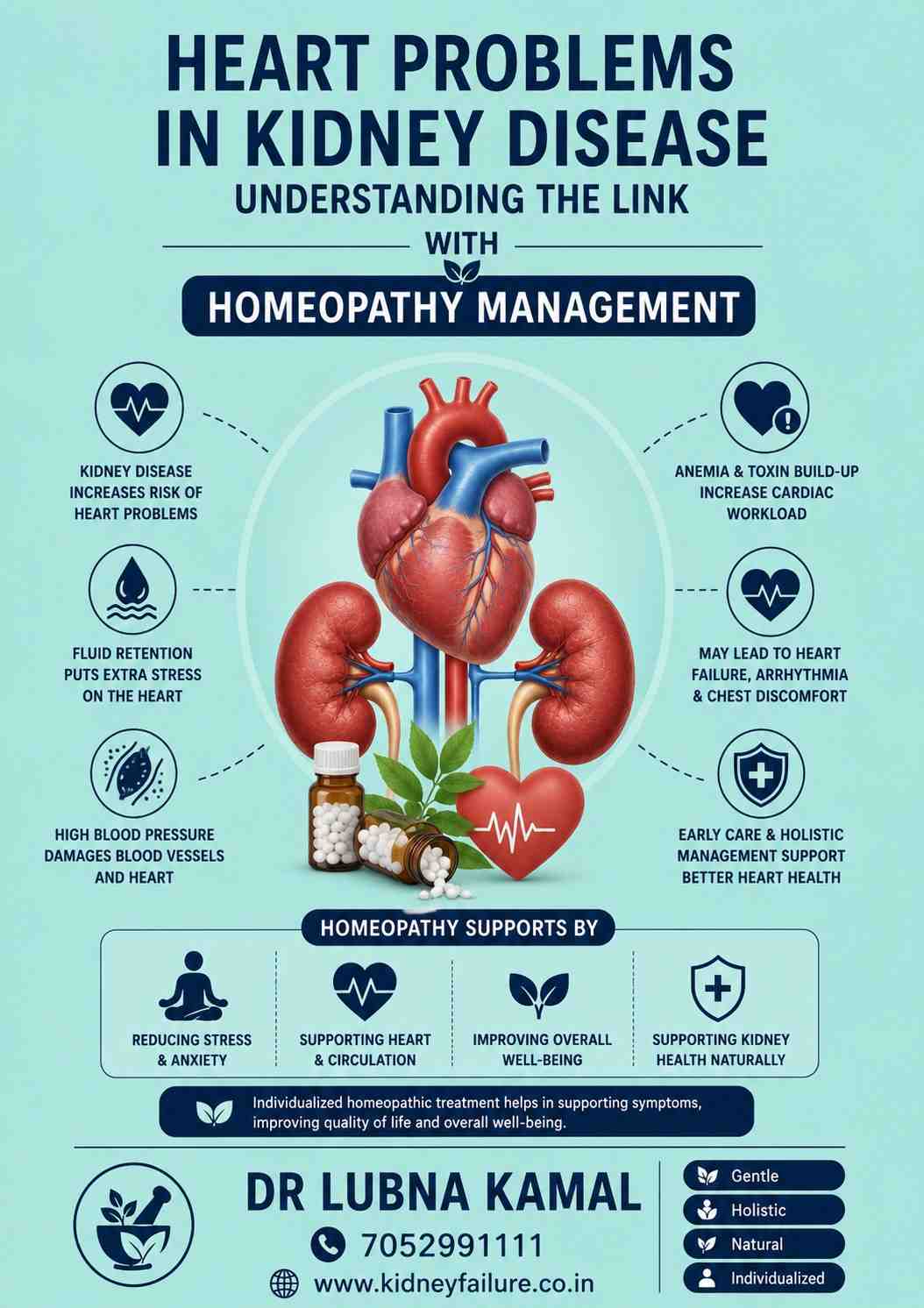
Heart Problems in Kidney Disease: Understanding the Link with Homeopathy Management
Kidney disease and heart problems are closely connected health conditions. People suffering from Chronic Kidney Disease (CKD) are at a higher risk of developing cardiovascular complications such as high blood pressure, heart failure, irregular heartbeat, and fluid overload. In many cases, kidney disease and heart disease can worsen each other over time.
Understanding this connection is important for early diagnosis, proper treatment, and long-term health management
How Kidney Disease Affects the Heart
The kidneys and heart work together to maintain healthy blood circulation, blood pressure, fluid balance, and overall body function. When the kidneys stop functioning properly, several changes occur in the body that may put extra stress on the heart.
Common Reasons Heart Problems Develop in Kidney Disease
1. High Blood Pressure
Damaged kidneys are less effective at controlling blood pressure. Persistent hypertension increases strain on the heart and blood vessels.
2. Fluid Retention
Kidney disease can cause excess fluid accumulation in the body, leading to swelling, breathlessness, and increased workload on the heart.
3. Anemia
CKD may reduce red blood cell production, decreasing oxygen supply to the heart and increasing fatigue and cardiac stress.
4. Electrolyte Imbalance
Abnormal potassium and sodium levels may affect heart rhythm and increase the risk of arrhythmias.
5. Toxin Build-Up
Waste products accumulating in the blood may negatively impact blood vessels and heart function.
6. Diabetes and Cholesterol
Many CKD patients also have diabetes and high cholesterol, which increase cardiovascular risk.
Common Heart Symptoms in Kidney Disease Patients
Patients may experience:
- Breathlessness
- Chest discomfort
- Swelling in legs and feet
- High blood pressure
- Fatigue and weakness
- Palpitations
- Irregular heartbeat
- Reduced stamina
- Difficulty lying flat due to breathing problems
These symptoms should never be ignored and require proper medical evaluation.
Heart Conditions Commonly Seen in CKD Patients
1. Heart Failure
The heart becomes unable to pump blood effectively due to fluid overload and increased strain.
2. Left Ventricular Hypertrophy
High blood pressure may cause thickening of the heart muscle.
3. Coronary Artery Disease
Blocked heart arteries may develop more commonly in CKD patients.
4. Arrhythmias
Electrolyte disturbances may lead to irregular heart rhythm.
Diagnosis and Medical Evaluation
Doctors may recommend:
- Blood pressure monitoring
- Kidney function tests
- ECG
- Echocardiography
- Blood tests
- Electrolyte evaluation
- Chest X-ray
- Cardiac assessment
Regular monitoring is important for both kidney and heart health.
Homeopathy Management for Heart Problems in Kidney Disease
Homeopathy focuses on individualized and holistic care. Some patients seek supportive homeopathic management to help improve overall well-being, emotional health, stress levels, fatigue, and quality of life alongside standard medical treatment.
Homeopathy should never replace emergency cardiac care, dialysis, or prescribed medicines.
Lifestyle Measures for Better Heart and Kidney Health
Patients should focus on:
- Regular blood pressure monitoring
- Following kidney-friendly diet advice
- Limiting salt intake
- Managing diabetes properly
- Avoiding smoking and alcohol
- Taking medications regularly
- Maintaining healthy weight
- Regular medical follow-up
- Stress management and adequate rest
When to Seek Immediate Medical Attention
Seek urgent care if symptoms include:
- Severe chest pain
- Sudden breathlessness
- Fainting
- Severe swelling
- Rapid heartbeat
- Confusion
- Very high blood pressure
These symptoms may indicate serious complications.
Conclusion
Heart problems and kidney disease are strongly interconnected and require careful long-term management. Early diagnosis, regular monitoring, proper medical treatment, healthy lifestyle habits, and supportive care are essential for improving patient outcomes.
Homeopathy may provide supportive holistic care for stress, fatigue, weakness, and overall well-being when used alongside standard medical treatment under professional supervision.



