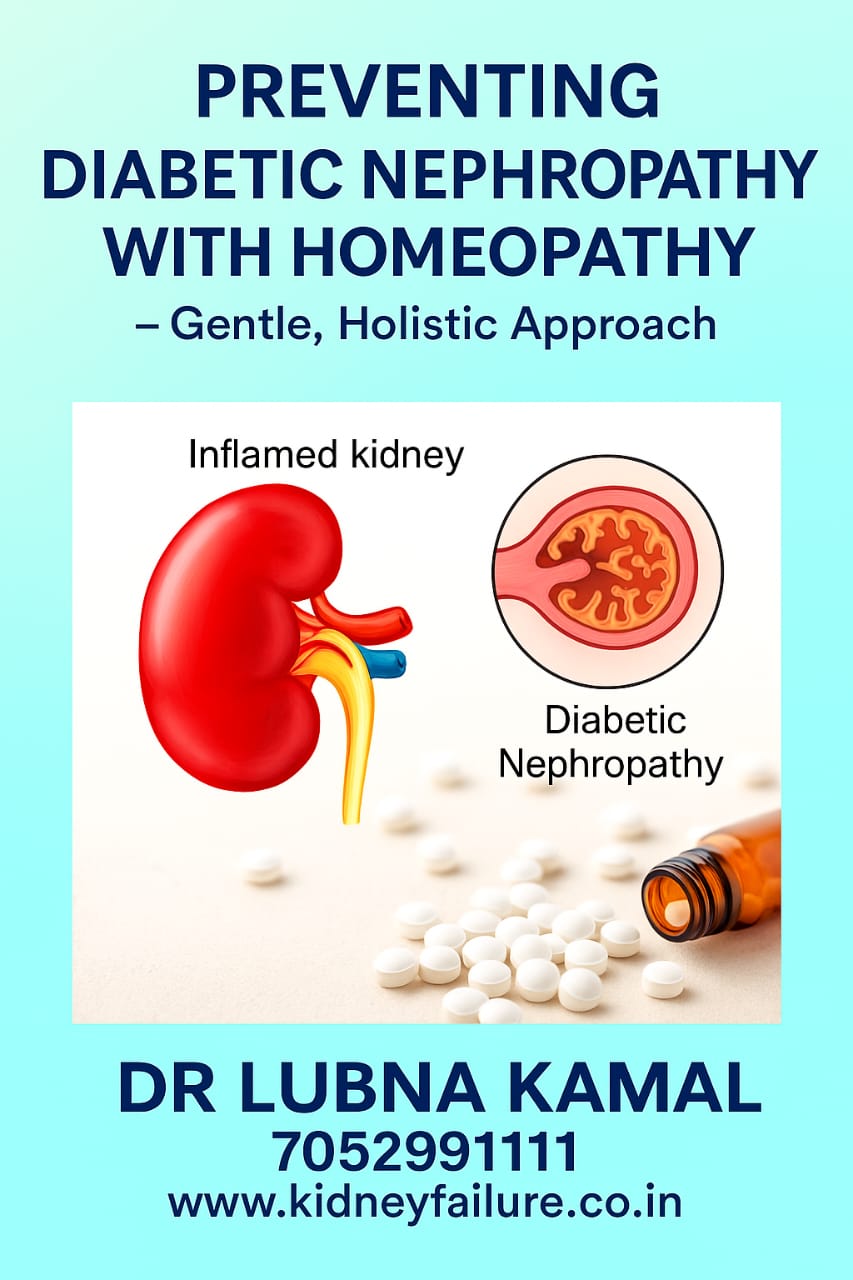
Preventing Diabetic Nephropathy with Homeopathy: A Gentle, Holistic Approach
Introduction:-
Diabetic Nephropathy (often abbreviated DN) is one of the most serious microvascular complications of Type 2 Diabetes Mellitus. When diabetes is present, over time the kidneys’ delicate filtering units can be damaged—leading to chronic kidney disease (CKD) and, in some cases, end-stage renal failure. Early damage often develops silently, so timely intervention is vital if you are managing diabetes and want to protect your kidneys.
Understanding Diabetic Nephropathy – Why It Matters
Diabetic nephropathy develops when long-standing elevated blood sugar levels and other metabolic changes begin to damage the kidney’s filtering system. Tiny blood vessels in the glomeruli (filtering units) are affected, structural changes set in and gradually kidney function declines.
How it happens:-
— Here’s a simplified overview of the pathophysiology (mechanism) of DN:
- - Persistent hyperglycaemia (high blood sugar) triggers metabolic changes.
- - This causes thickening of the glomerular basement membrane, expansion of mesangial matrix and damage to podocytes (cells that help filtration).
- - Alongside this, glomerular hypertension (raised pressure in the filtering units) and hyperfiltration occur early on.
- - Over time there is increasing protein leakage (albuminuria → proteinuria), reduction in glomerular filtration rate (GFR) and eventual kidney scarring (glomerulosclerosis, interstitial fibrosis).
Why Preventive Care Matters in Diabetic Kidney Damage:-
When the kidneys are damaged due to diabetes, the decline may be gradual but progressive. If unchecked, you may ultimately need dialysis or transplantation. Prevention therefore is far better than cure. The generic medical guideline emphasises tight blood sugar control and blood pressure management as foundational steps.
In this context, complementary approaches—such as homeopathy—can provide additional support, especially for early-stage prevention, helping to address the whole person (body, mind, emotions) rather than just the disease label.
Homeopathic Approach: A Holistic Lens
The homeopathic perspective emphasises that every patient is unique: two people with the same metabolic disease may experience their illness differently, emotionally and physically. In the case of diabetic nephropathy, a homeopathic practitioner will typically evaluate:
Individualised Treatment:-
- - Physical generals: thirst patterns, sweating (night/day), appetite (increased/decreased), sleep quality, nature of fatigue, water retention/edema.
- - Mental-emotional symptoms: irritability, anxiety or depression associated with chronic illness, fear of complications, sleep-disturbing thoughts, emotional suppression or grief.
- - Past history: suppressed skin eruptions, long-term infections, suppressed coughs, stress history, trauma.
- - Family history & miasmatic background: whether there is a background of diabetes, kidney disease, high blood pressure in the family; assessing predominant miasm (homeopathic concept) such as sycotic or syphilitic tendencies.
Designing a Preventive Homeopathic Strategy—
While homeopathy is highly individualised, here are general principles a practitioner may follow when aiming at kidney-protection in diabetes:-
- 1. Lifestyle & foundational health: Even before remedies, emphasise the basics. Good glycaemic control, BP monitoring, healthy diet (kidney-friendly: lower salt, balanced protein intake), regular exercise, avoiding smoking.
- 2. Regular monitoring: Urinary albumin (microalbuminuria test) annually (or more frequently if risk factors exist), serum creatinine & eGFR, blood pressure tracking. Early detection means early intervention.
- 3. Remedy selection: Based on full assessment of constitution, general symptoms, mental/emotional state, and family/suppression history. The goal is to bolster the person’s own healing capacity, reduce susceptibility to microvascular injury.
- 4. Adjunct symptom-management: If early signs such as oedema, fatigue, high BP appear, homeopathic remedies may be chosen to address these while conventional medical care is maintained.
- 5. Long-term viewpoint: Instead of a one-time fix, the preventive approach is ongoing. The aim is to slow the degenerative process rather than promise reversal of advanced damage alone.



