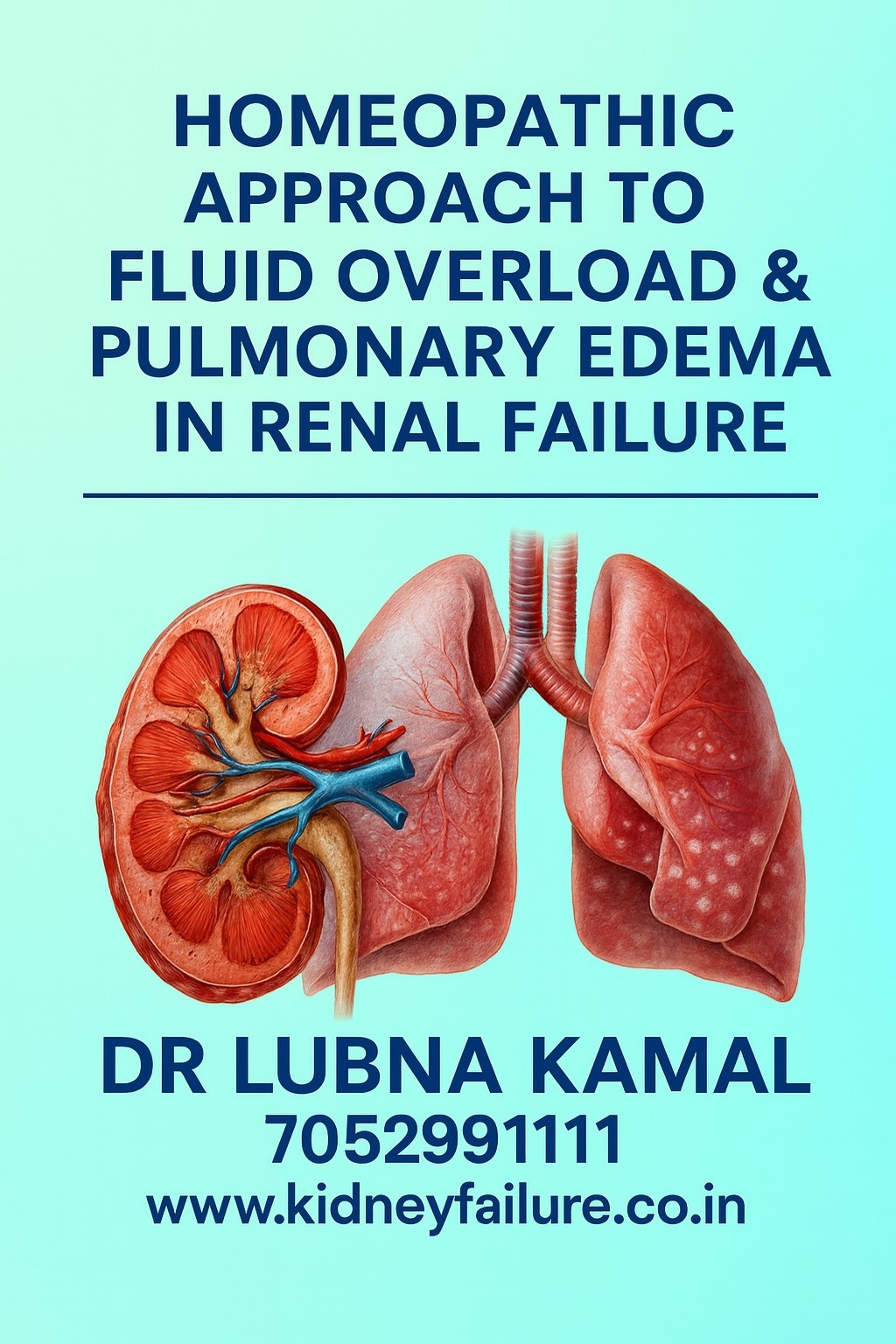
Homeopathic Approach to Fluid Overload & Pulmonary Edema in Renal Failure
Fluid overload is one of the most distressing complications faced by patients living with chronic kidney failure. When the kidneys lose their ability to remove extra water and salt from the body, fluid begins to accumulate slowly in different tissues. The legs may swell, the face may puff up, breathing may become uncomfortable, and the patient may feel heavy, tired, and restless throughout the day. In serious cases, this excess fluid collects in the lungs, a condition known as pulmonary edema, which can cause sudden breathlessness, chest tightness, coughing, and even life-threatening respiratory distress.
Understanding Fluid Overload in Kidney Failure
Healthy kidneys filter around 180 liters of fluid every day, deciding how much water the body should keep and how much needs to be removed. They work continuously to maintain internal balance. But in kidney failure, this fine-tuned system breaks down.
Why fluid overload occurs in renal failure:
1. Reduced filtering capacity
Damaged kidneys cannot remove extra water, salt, and toxins. These substances gradually build up in the body, leading to swelling (edema).
2. Hormonal imbalance
Kidneys regulate hormones like renin and aldosterone, which control blood pressure and body fluids. When these hormones are disturbed, fluid retention worsens.
3. Heart strain
Long-standing kidney disease often places pressure on the cardiovascular system. Weakened heart function further contributes to lung congestion and swelling.
4. Protein loss
Many kidney patients lose protein through urine. Low protein levels reduce the blood’s ability to hold fluid, causing water to collect in tissues.
Symptoms of Fluid Overload
Fluid retention often develops slowly. Some common signs include:
- Swelling of legs, feet, hands, or face
- Puffy eyelids, especially in the morning
- Sudden weight gain
- Fatigue or heaviness in the body
- Tightness of skin
- Reduced urine output
- Difficulty lying flat
- Breathlessness on mild exertion
- Persistent cough or wheezing
- Chest discomfort in advanced cases
Homeopathic Approach: A Holistic Supporting Method
Homeopathy does not replace dialysis, emergency treatment, or standard nephrology care. Instead, it works alongside ongoing treatment as a safe, individualized supportive therapy. Many kidney patients prefer homeopathy because it is gentle, non-habit-forming, and free from organ-damaging side effects.
How does homeopathy help?
1. Reduces fluid retention naturally
Certain homeopathic medicines help the body eliminate retained water through improved urination and reduced swelling.
2. Supports respiratory function
Remedies for pulmonary congestion may help ease breathlessness, chest tightness, and coughing.
3. Enhances vitality
Homeopathy improves overall energy levels, reduces fatigue, and supports the body’s internal balance.
4. Addresses emotional stress
Long-term illness causes anxiety, fear, and frustration. Homeopathy takes the patient’s mental state into consideration.
5. Complements kidney-safe lifestyle changes
Homeopathy works best when paired with a renal-friendly diet, salt restriction, and fluid monitoring.
Lifestyle Measures to Control Fluid Overload
Homeopathy works best when combined with medical guidance and healthy habits.
1. Monitor fluid intake
Patients should strictly follow the nephrologist’s advice. Even “extra” sips can worsen fluid retention.
2. Limit salt
Salt directly increases water retention. Using low-sodium diets and avoiding packaged food is essential.
3. Track daily weight
A sudden increase of 1–2 kg within 24–48 hours signals dangerous fluid build-up.
4. Maintain blood sugar & blood pressure
Both conditions significantly worsen kidney health and fluid overload.
5. Avoid lying flat if breathing is difficult
Use two pillows or a semi-reclining position.
6. Take medications regularly
Skipping dialysis sessions, diuretics, or prescribed drugs can lead to emergency situations.
7. Follow a renal-friendly diet
Focus on low-potassium and low-phosphorus foods as recommended by a dietician.



