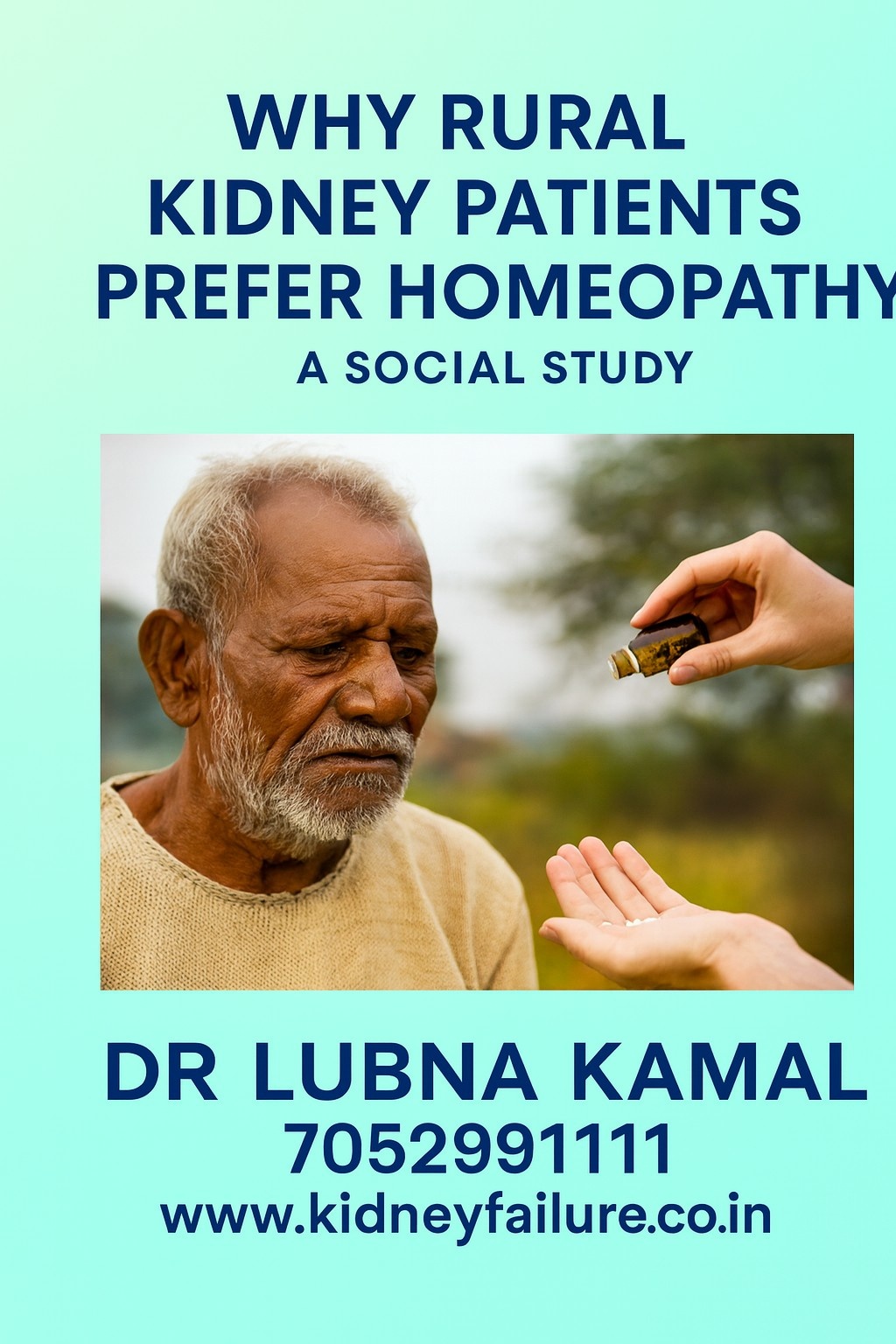
Why Rural Kidney Patients Prefer Homeopathy: A Social Study
In many parts of rural India, the journey of a kidney patient looks very different from what city-based healthcare systems often assume. Modern tests, specialist consultations, and long-term dialysis are available mostly in urban centres, and reaching them can be expensive, time-consuming, and emotionally draining. In such settings, homeopathy has quietly become a preferred system of care—not as a replacement for emergency or life-saving treatment, but as a more accessible and culturally accepted method of long-term support.
This social study explores the reasons why rural kidney patients turn toward homeopathic treatment, what influences their decision-making, and how homeopathy fits into the larger rural healthcare reality. The goal is not to compare medical systems, but to understand patient behaviour, expectations, and lived experiences.
1. Accessibility: The Most Powerful Factor in Rural Healthcare
One of the strongest reasons rural kidney patients prefer homeopathy is easy accessibility.
In many villages, the nearest nephrologist may be 60–120 km away, and getting there often requires:
Multiple modes of transport
High travel expenses
A full day away from work
Family members accompanying the patient
In contrast, a homeopathic physician is usually within the same block or neighbouring village. Most patients say they prefer treatment that does not disturb their daily routine or earnings.
2. Affordability and Long-Term Trust in Homeopathic Costs
Kidney diseases—especially chronic kidney disease (CKD)—require long-term management. Dialysis, repeated laboratory tests, consultations, and medicines become financially overwhelming for families dependent on agriculture or daily wages.
Homeopathy, meanwhile, is perceived as:
Low-cost
Safe for long-term use
Budget-friendly for CKD patients
Without major diagnostic expenses
For many rural patients, the choice is less about medical superiority and more about practical survival. A system that they can afford regularly becomes the system they trust.
3. Cultural Belief System: A Deep Emotional Connection
Rural communities have strong cultural roots in natural or traditional healing. Homeopathy, with its gentle approach and plant/mineral-based medicines, fits comfortably into this belief system.
Patients often associate homeopathy with:
Natural healing
Personalized care
“Safe medicines” without side effects
A doctor who listens patiently
This emotional reassurance plays a major role in decision-making. When patients feel respected, heard, and supported, trust naturally grows.
4. Fear of Dialysis and Myths Around Kidney Treatments
A recurring pattern seen across villages is fear of dialysis. Many patients believe:
Dialysis means the “end stage”
Once dialysis starts, life becomes restricted
Dialysis causes weakness
Patients die soon after starting dialysis
Because of these fears, families look for alternative systems that promise comfort and hope. Homeopathy becomes a psychological anchor—patients feel they are “trying everything possible” before choosing dialysis.
5. Personalized Attention and Longer Consultation Times
One of the most appreciated aspects of homeopathic practice, especially in rural contexts, is time.
Homeopathic doctors typically:
Spend longer time understanding each patient
Ask detailed questions about habits, lifestyle, emotions
Discuss diet in a simplified manner
Build a friendly doctor–patient relationship
Conclusion: A Social Reality That Cannot Be Ignored
Homeopathy’s popularity among rural kidney patients is rooted not only in medical belief but in social conditions, economic limitations, emotional needs, cultural expectations, and the human desire for hope.
Understanding these factors can help:
Policymakers improve rural kidney care
Doctors communicate better with patients
Healthcare systems provide patient-centric solutions
Communities receive accurate guidance
Homeopathy, for many village families, represents accessibility, affordability, emotional comfort, and cultural faith—elements that modern healthcare must acknowledge if it hopes to serve rural patients better.



