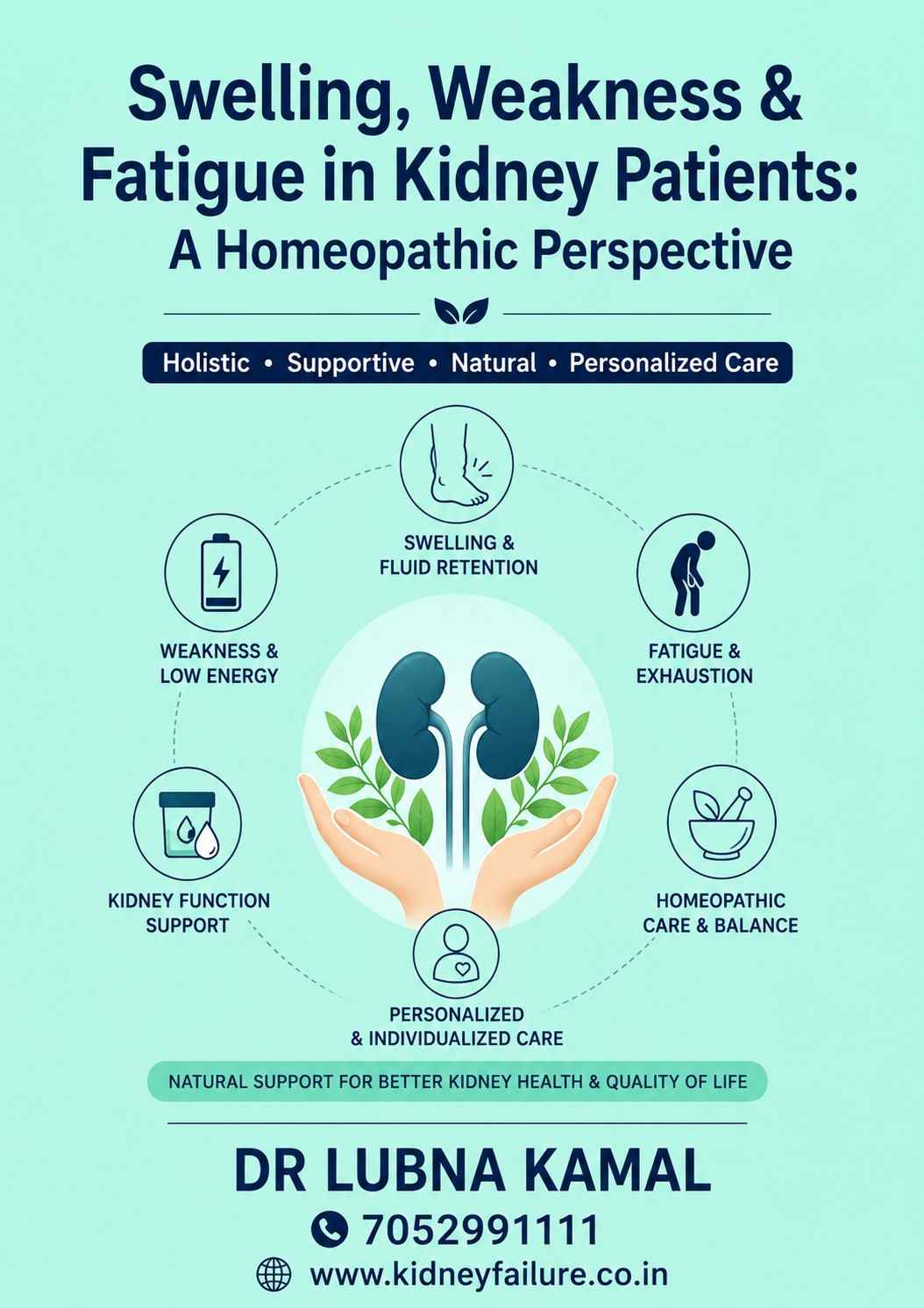
Swelling, Weakness & Fatigue in Kidney Patients: A Homeopathic Perspective
Kidney-related problems are becoming increasingly common due to modern lifestyle changes, diabetes, hypertension, poor dietary habits, and chronic stress. Among the most frequently experienced symptoms in kidney patients are swelling in the body, persistent weakness, and extreme fatigue. These symptoms can significantly affect quality of life and may indicate declining kidney function.
Many people today search for supportive and holistic treatment approaches that focus not only on reports and laboratory values but also on overall well-being.
Homeopathy is often explored as a complementary and individualized supportive approach for managing kidney-related symptoms.
Understanding Swelling in Kidney Patients
Swelling, medically known as edema, commonly occurs when the kidneys are unable to remove excess fluid and waste effectively from the body. This fluid accumulation may appear in:
- Feet and ankles
- Legs
- Hands
- Face or around the eyes
- Abdomen
In kidney disorders, swelling may become more noticeable in the morning or after prolonged sitting.
Common Causes of Swelling in Kidney Disease
- Reduced kidney filtration
- Protein loss through urine
- High sodium intake
- Chronic kidney disease (CKD)
- Nephrotic syndrome
- Poor fluid balance
- High blood pressure
Why Weakness and Fatigue Occur in Kidney Patients
Fatigue is one of the most common complaints among kidney patients. Many individuals describe feeling exhausted even after minimal physical activity.
This may happen because:
- Waste products accumulate in the blood
- Hemoglobin levels may decrease
- Sleep quality becomes poor
- Appetite reduces
- Electrolyte imbalance develops
- The body’s energy production becomes affected
Weakness may also be associated with muscle cramps, dizziness, body heaviness, and reduced stamina.
Symptoms That Should Not Be Ignored
Kidney-related swelling and fatigue may sometimes progress gradually. Medical evaluation becomes important if symptoms include:
- Persistent swelling
- Reduced urine output
- Frothy urine
- Breathlessness
- Loss of appetite
- Nausea
- Back pain
- Elevated creatinine
- Uncontrolled blood pressure
A Homeopathic Perspective on Kidney Symptoms
In homeopathy, treatment is generally selected according to the individual’s overall symptom pattern, constitution, mental state, and associated complaints rather than focusing only on a disease label.
Homeopathic practitioners may evaluate:
- Nature and location of swelling
- Urinary symptoms
- Appetite and thirst
- Sleep disturbances
- Energy levels
- Emotional stress
- Associated metabolic disorders
The goal of supportive homeopathic care is often to help improve general comfort, vitality, and overall balance while working alongside proper medical supervision.
Lifestyle Support for Kidney Patients
Along with professional medical care, supportive lifestyle measures may help improve daily comfort:
Maintain Kidney-Friendly Nutrition
A balanced diet with controlled salt intake may help reduce swelling and fluid overload.
Stay Hydrated Carefully
Fluid intake should always follow medical advice, especially in kidney disease.
Monitor Blood Pressure and Blood Sugar
Poorly controlled diabetes and hypertension can worsen kidney damage.
Prioritize Rest and Sleep
Fatigue may improve with proper sleep habits and stress reduction.
Avoid Excessive Processed Foods
Highly processed foods may increase sodium burden on the kidneys.
Can Homeopathy Cure Kidney Disease?
Kidney diseases can vary from mild reversible conditions to advanced chronic kidney disease requiring dialysis or specialized nephrology care. Homeopathy is generally considered by many patients as a supportive complementary approach aimed at symptom management and holistic wellness.
Patients with serious kidney conditions should never stop conventional treatment without consulting their treating physician.
Final Thoughts
Swelling, weakness, and fatigue in kidney patients should never be ignored. These symptoms may indicate fluid imbalance, declining kidney function, or other underlying health concerns. Early evaluation, lifestyle management, regular monitoring, and professional medical guidance are essential.
Homeopathy is increasingly explored by many individuals seeking a personalized and holistic supportive approach for kidney-related discomforts. An individualized treatment plan under qualified supervision may help support overall well-being and quality of life.



