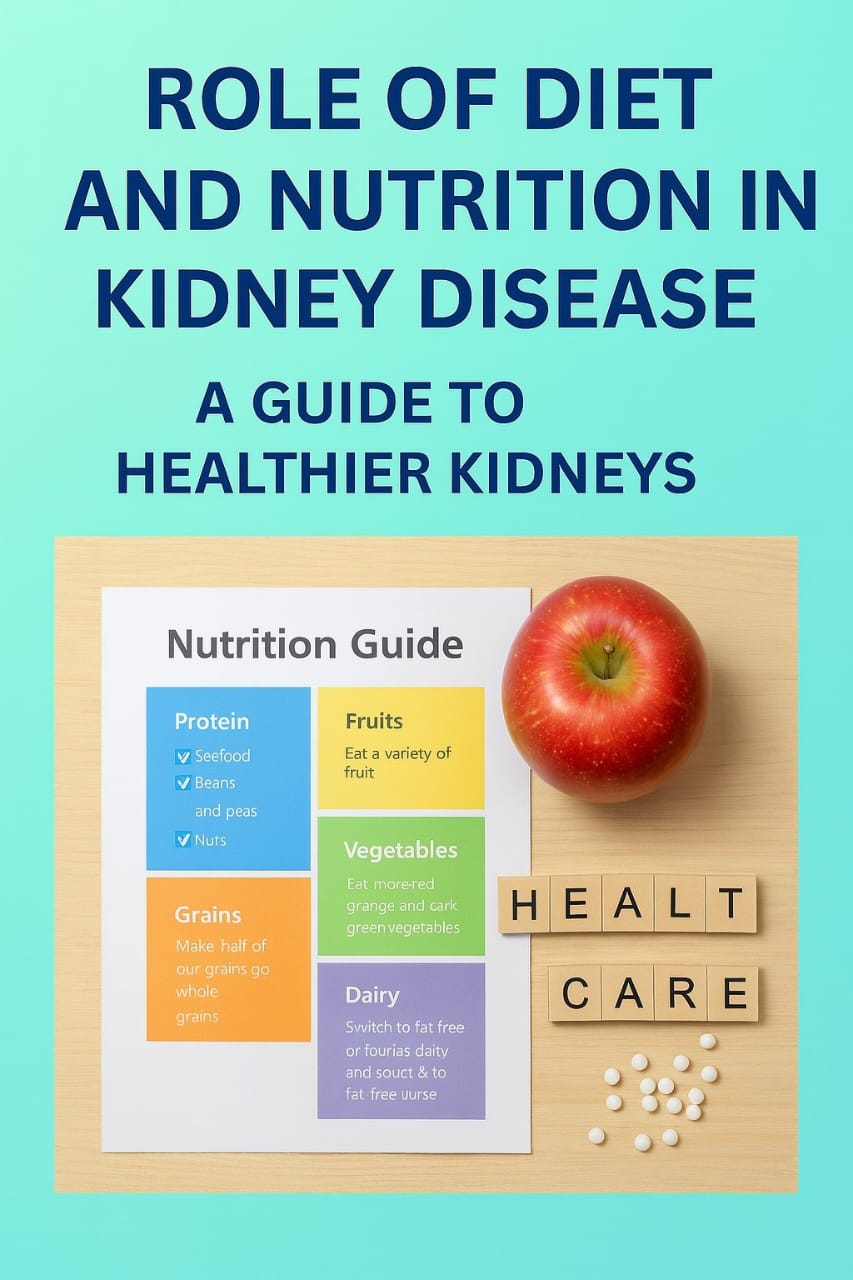
Role of Diet and Nutrition in Kidney Disease – A Guide to Healthier Kidneys
Introduction:-
The kidneys are remarkable organs that keep our bodies clean from within. They filter out toxins, balance electrolytes, and regulate the body’s fluid levels. When kidney function begins to decline, this delicate balance is disturbed. Waste products start to accumulate, blood pressure rises, and nutrient levels fluctuate.
Key Nutritional Guidelines for Kidney Disease:-
- Protein Intake – Balancing Quantity and Quality
- Sodium (Salt) Control – Keep Blood Pressure in Check
- Potassium Management – Protect Your Heart
- Phosphorus Control – Keep Bones Strong
- Fluid Management – Avoid Swelling and Breathlessness
Benefits of Proper Diet and Nutrition in Kidney Disease:-
- A personalized kidney-friendly diet offers several long-term benefits:
- Slows down the progression of chronic kidney disease (CKD).
- Reduces the risk of complications like heart problems, bone weakness, and swelling.
- Boosts energy, improves appetite, and enhances overall quality of life.
- Lowers hospital visits and helps maintain stable blood pressure and lab values.



